


If you have ever walked into a space and instantly felt grounded, warm, and creatively alive all at once, chances are you were standing in a boho living room with Afrohemian soul. This distinctive design style blends the free-spirited, layered aesthetic of bohemian décor with the rich cultural heritage of African artistry, creating interiors that feel deeply personal and visually magnetic. The result is a living room that tells a story through woven textures, earthy tones, handcrafted accents, and natural materials sourced from the earth. Whether you are starting from scratch or refreshing an existing space, these 15 boho living room ideas will show you exactly how to layer African roots with earthy bohemian energy to create a home that feels authentically yours.
What Is Afrohemian Style and Why It Works So Well in Living Rooms
Afrohemian style is the beautiful marriage of African-inspired décor and bohemian design philosophy. It draws from the bold geometric patterns of West African kente cloth, the earthy warmth of Moroccan interiors, the handwoven traditions of East African craftsmanship, and the free-flowing, nature-first ethos of classic boho design. In a living room, this combination works exceptionally well because the space is inherently social and expressive. It is where you welcome guests, unwind after long days, and surround yourself with the things that matter most. Afrohemian style gives you permission to mix a hand-dyed indigo throw with a rattan coffee table, to hang a mud cloth wall piece beside a trailing pothos, and to stack mismatched vintage cushions on a low linen sofa without anything feeling out of place. The key philosophy here is intentional eclecticism — every piece is chosen with purpose, and together they create a layered harmony that feels both culturally rooted and effortlessly modern.
Layer Mud Cloth Textiles Across Seating and Walls
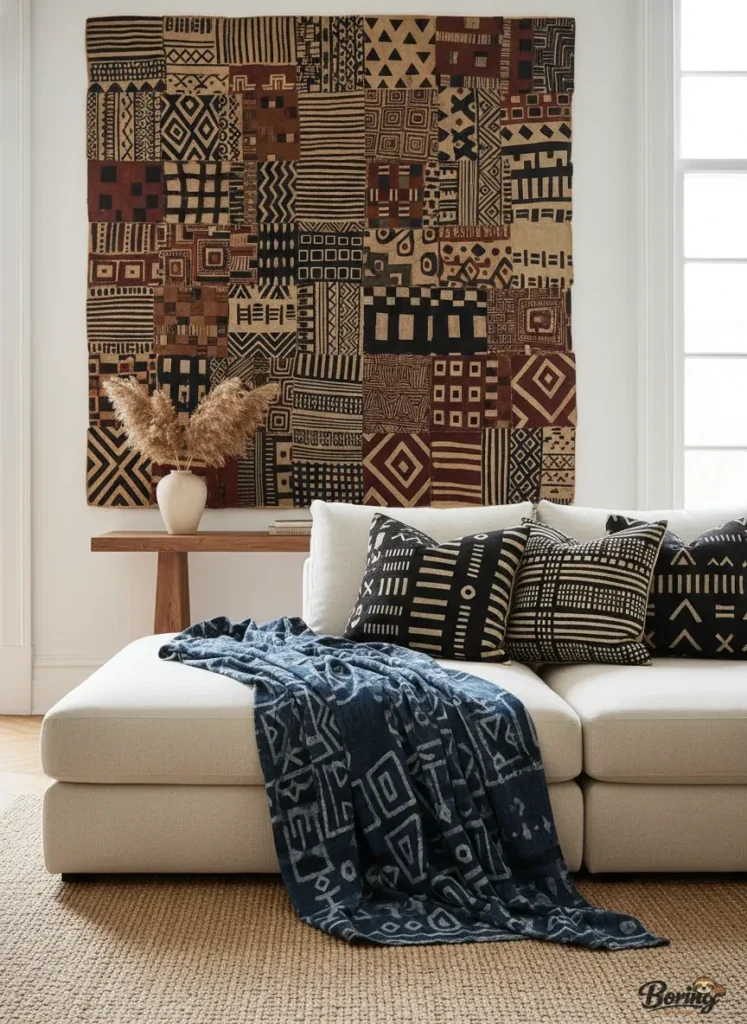
Mud cloth, known as bògòlanfini in the Bambara language of Mali, is one of the most iconic textiles in African design history. Hand-dyed using fermented mud and plant-based pigments, traditional mud cloth features bold geometric symbols in deep browns, creams, and blacks. In a boho living room, mud cloth is one of the most versatile elements you can introduce. Drape a large mud cloth throw over the back of a linen sofa, use a mud cloth pillow cover to anchor an accent chair, or frame a piece of authentic mud cloth fabric as wall art. The raw, earthy quality of the fabric pairs naturally with natural wood furniture, sisal rugs, and rattan accents that are already staples of bohemian décor. What makes mud cloth so powerful as a design element is its ability to add visual weight and cultural depth without overwhelming the space. It speaks quietly but says a great deal about the sensibility of the person who placed it there.
Build Your Color Palette Around Earthy Warm Tones
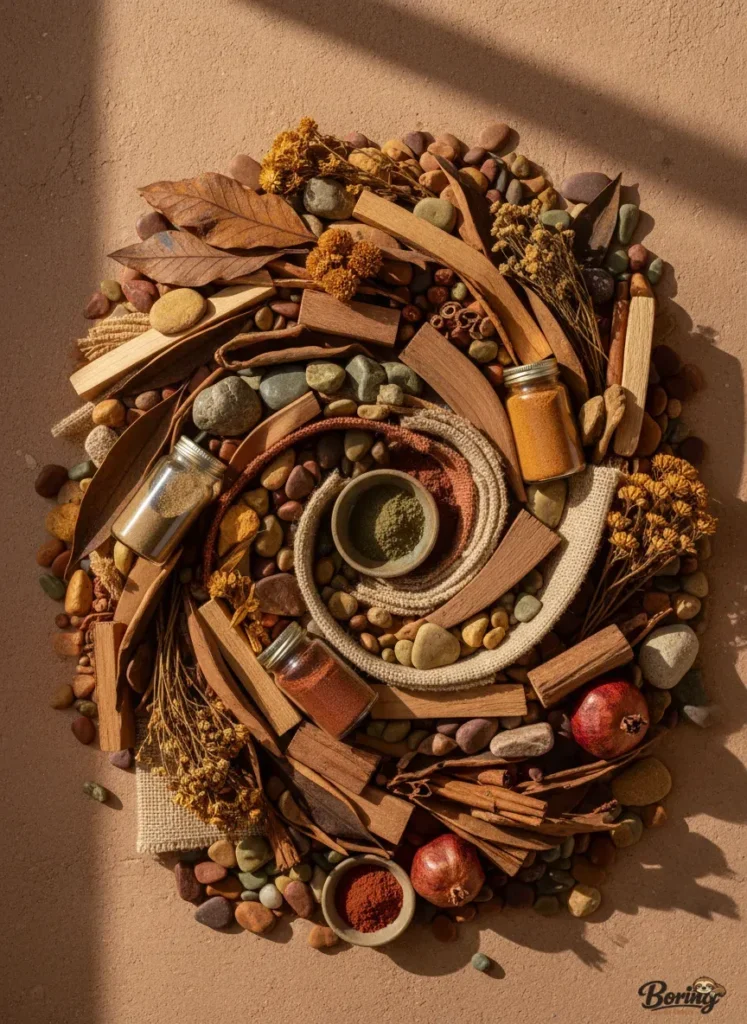
The foundation of any successful Afrohemian boho living room is a grounded, earthy color palette. Think terracotta, burnt sienna, warm ochre, deep forest green, dusty rose, and sandy cream. These tones mirror the colors found across the African continent’s diverse landscapes — the red clay of Kenyan highlands, the golden savannahs of the Serengeti, the deep green forests of the Congo Basin, and the sandy warmth of North African deserts. When building your palette, start with a neutral base on the walls such as warm white, aged linen, or soft greige. Then layer in your earthy tones through furniture upholstery, cushions, rugs, and ceramic accessories. The goal is not to match everything precisely but to create a tonal conversation between all the elements in the room. Terracotta and forest green together evoke an organic vitality. Ochre and dusty rose feel sun-warmed and welcoming. Deep brown and cream echo the patterns found in traditional African weaving. Let the colors breathe, overlap, and build on each other naturally.
Introduce Rattan and Wicker Furniture for Organic Structure
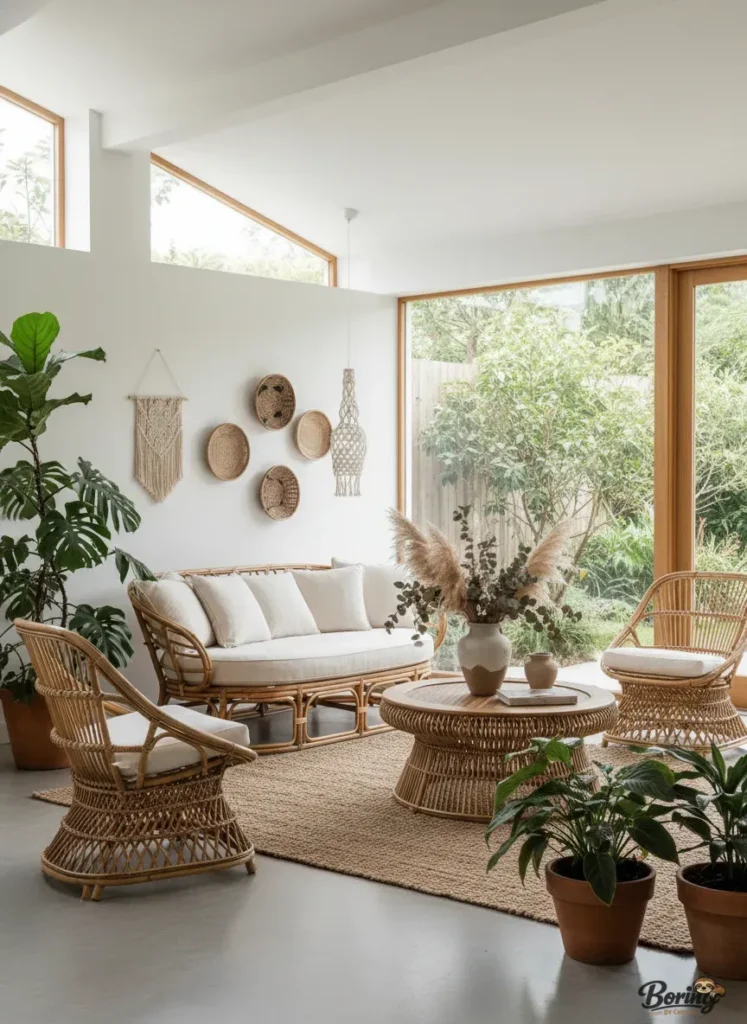
No boho living room feels complete without the organic texture of rattan or wicker, and in an Afrohemian space these materials feel especially at home. Rattan has been used in furniture-making across Africa and Asia for centuries, and its natural warmth and lightweight structure make it an ideal choice for creating an airy yet grounded living room atmosphere. Consider a rattan armchair with a plush cushion covered in a printed African fabric, a wicker side table beside a low sofa, or a rattan bookshelf displaying pottery, plants, and woven baskets. The beauty of rattan in a boho living room is that it never competes with other textural elements — it harmonizes with them. Place it beside a chunky jute rug, beneath a macramé wall hanging, or next to a terracotta plant pot and it simply makes every surrounding element look better. For a more contemporary Afrohemian edge, look for rattan pieces with darker staining or combined with black metal frames, which add a modern contrast to the natural fiber without losing its earthy soul.
Use Kente-Inspired Patterns in Cushions and Accent Pieces
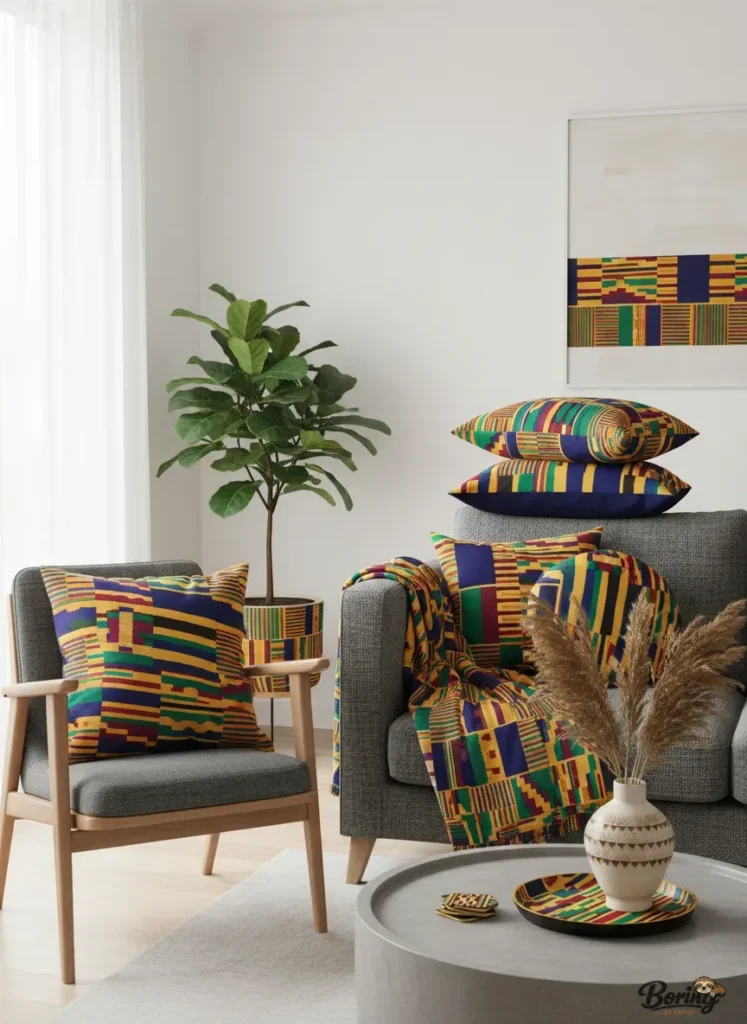
Kente cloth originates from the Akan people of Ghana and the Ivory Coast and is instantly recognizable for its vibrant, interlocking geometric patterns woven in vivid golds, greens, reds, and blues. While traditional kente holds deep ceremonial significance, its patterns have inspired a wide range of contemporary home textiles that carry the visual spirit of the original weave into modern interiors. In a boho living room with an Afrohemian sensibility, kente-inspired cushions, table runners, or accent poufs can inject a burst of joyful color into an otherwise earthy-toned space. The trick is to use them as intentional accent pieces rather than dominant elements. A single kente-inspired cushion on a neutral sofa, or a small kente-patterned pouf tucked beside a floor lamp, will add vibrancy and cultural personality without tipping the palette into visual chaos. Pair these accents with solid-colored cushions in complementary earthy tones — deep green, rust orange, or warm cream — to let the pattern breathe and stand out as a focal point.
Create a Gallery Wall with African Art and Natural Frames
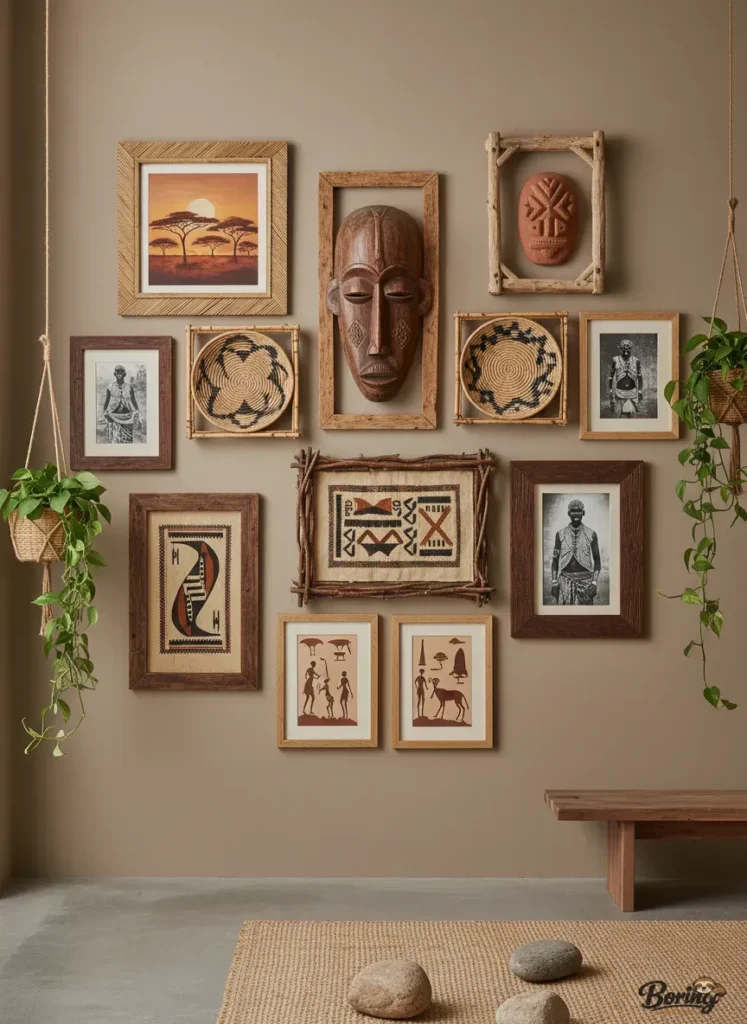
A gallery wall is one of the most expressive features you can build in a boho living room, and in an Afrohemian space it becomes a true celebration of cultural artistry and personal storytelling. Curate a collection of African-inspired prints, masks, woven wall hangings, and botanical artwork and arrange them in an organic, layered cluster on your main feature wall. Mix frame styles deliberately — raw wood frames, black metal frames, frameless linen-mounted prints, and even items displayed directly on the wall without a frame at all. Include a variety of sizes and shapes to keep the arrangement dynamic and visually interesting. Look for prints that feature bold graphic patterns, African wildlife, abstract interpretations of traditional symbols, or photography from across the continent. Intersperse the framed pieces with three-dimensional elements such as a small woven wall basket, a carved wooden mask, or a dried pampas grass arrangement in a slim vase mounted on a shelf. The result should feel curated but not overly symmetrical — it should look like a collection that has grown organically over time, filled with meaning and personality.
Anchor the Space with a Chunky Jute or Sisal Rug
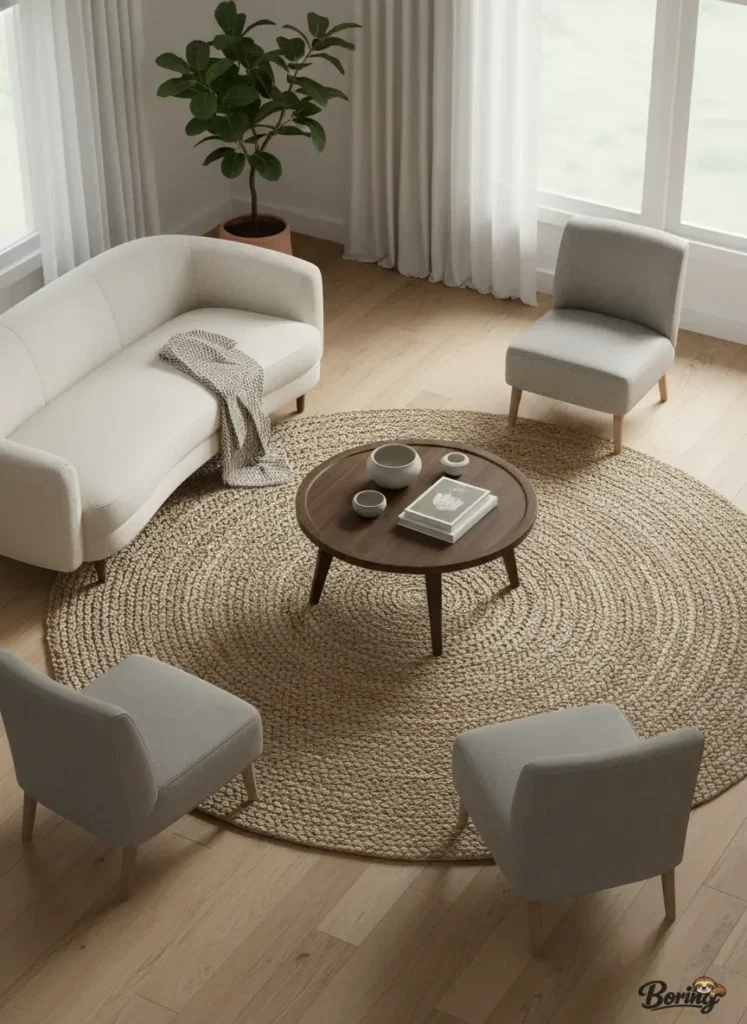
Every boho living room needs a rug that grounds the space, and in an Afrohemian interior the best choices lean into natural fiber textures that connect the room to the earth. Jute and sisal rugs are ideal because they are sustainably sourced, beautifully textured, and carry an inherent warmth that synthetic materials simply cannot replicate. A large chunky jute rug laid across the central seating area will immediately unify the furniture arrangement and add a layer of rich, tactile warmth underfoot. For a more visually layered approach, try rug-on-rug styling — place a smaller Moroccan Beni Ourain rug or a patterned kilim rug over your base jute layer to create depth and introduce additional pattern. This technique is a hallmark of both bohemian and African-inspired interior design and adds tremendous visual richness to the floor plane of the room. When selecting rug sizes, always go larger than you think you need — a rug that extends beneath the front legs of all seating pieces makes the room feel expansive and intentionally designed rather than sparse and accidental.
Bring the Outdoors In with Abundant Tropical Plants
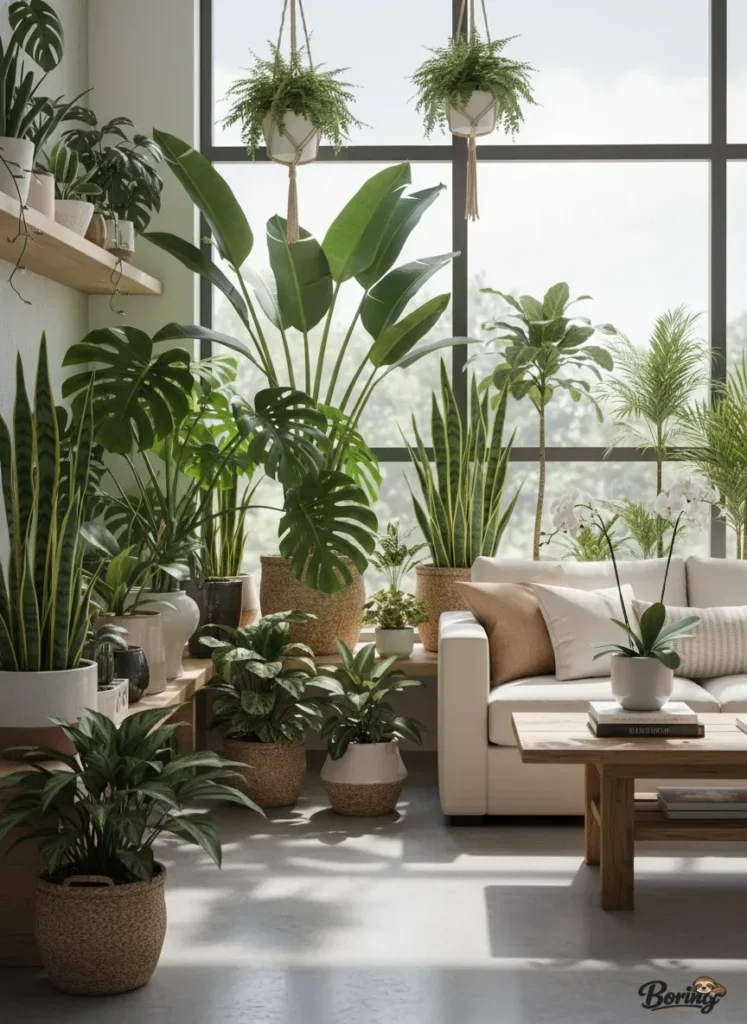
Plants are non-negotiable in a boho living room, and in an Afrohemian space they carry special significance as connectors to the natural world that so deeply informs African design philosophy. Fill your living room with an abundant, layered mix of tropical and earthy plants that vary in scale, leaf shape, and container style. A large fiddle leaf fig or bird of paradise in a terracotta pot makes a dramatic statement in a corner, while trailing pothos or heartleaf philodendrons tumbling from shelves and hanging planters add movement and life to vertical surfaces. Group smaller plants together on a wooden plant stand or window ledge using handmade ceramic pots and woven basket planters to reinforce the earthy, artisanal aesthetic. Dried botanicals — pampas grass, dried palm fronds, bundles of eucalyptus — add texture and warmth alongside their living counterparts and require zero maintenance. The goal is to make your living room feel like a verdant interior garden where the boundaries between indoors and the natural world blur softly into each other.
Style Low Seating with Layered Floor Cushions and Poufs
One of the most distinctive features of both African and bohemian interior traditions is an embrace of low, relaxed seating that invites people to settle in, slow down, and stay a while. Incorporate this philosophy into your boho living room by mixing your primary sofa or sectional with floor-level seating options such as large floor cushions, Moroccan leather poufs, and low-slung seating cushions in various sizes and fabrics. Cluster a group of oversized floor cushions in earthy linen, printed cotton, and woven fabric around a low wooden coffee table or a carved African side table for a casual gathering nook within the larger living space. Moroccan leather poufs in cognac, dusty rose, or forest green add a sculptural quality that doubles as extra seating or a footrest. Layering different seating heights creates a sense of informal abundance that is central to the Afrohemian aesthetic — it says that this space is for real living, for conversation, for comfort, for gathering.
Incorporate Handmade Ceramics and Terracotta Vessels
Ceramics and pottery are among the oldest forms of artistic expression across the African continent, and incorporating handmade ceramic pieces into your boho living room is one of the most authentic ways to honor that heritage. Look for vessels, vases, and decorative bowls that feel handcrafted — slightly imperfect in form, with visible texture, fingerprint marks, or glaze variations that speak to the human hand that shaped them. Terracotta is an especially beautiful choice because its warm reddish-brown tones harmonize naturally with the earthy palette of an Afrohemian interior. Style a cluster of terracotta pots in varying heights on a wooden sideboard or bookshelf, tuck a large ceramic vase filled with dried pampas grass beside a rattan chair, or display a collection of small handpainted bowls on a low coffee table. The imperfection and warmth of handmade ceramics adds a grounding, soulful quality to the room that mass-produced accessories simply cannot replicate.
Hang Woven Macramé Alongside African Textile Wall Art
Macramé and African textile art may come from different creative traditions but they share a deep common ground in their celebration of fiber, craft, and handmade beauty. In a boho living room with Afrohemian influences, mixing macramé wall hangings with African textile pieces creates a rich, multi-layered wall treatment that adds both warmth and visual complexity. Hang a large natural cotton macramé piece as a soft, organic backdrop and flank it with smaller framed African wax print panels, a woven raffia wall basket, or a length of hand-dyed Adire fabric mounted on a wooden dowel. The contrast between the loose, flowing loops of macramé and the structured geometric patterns of African textiles creates a beautiful visual tension that keeps the eye moving and the space feeling dynamic. Keep the color palette consistent across both — natural creams and warm whites for the macramé, earthy tones and deep jewel accents for the African textile pieces — to ensure the wall treatment feels cohesive rather than chaotic.
Choose Natural Wood Furniture with Raw, Unfinished Edges
The furniture you choose for an Afrohemian boho living room should feel connected to the natural world — raw, honest, and full of character. Natural wood is the ideal material because it carries the warmth, grain variation, and organic imperfection that synthetic materials lack. Look for coffee tables, side tables, and shelving units made from solid wood with minimal processing — live-edge slabs that retain the natural outline of the tree, reclaimed wood pieces with weathered patina, or hand-carved wooden stools and trays that celebrate the grain and character of the material. Darker woods like walnut, mahogany, or dark-stained mango wood add depth and richness to an earthy palette, while lighter woods like acacia or pine create an airier, more sun-bleached feel. Mix wood tones deliberately rather than matching them precisely — a dark walnut coffee table beside a lighter rattan bookshelf and a medium-toned wooden side table creates a layered, collected quality that is central to both bohemian and African design sensibilities.
Use Warm, Ambient Lighting to Enhance the Earthy Mood
Lighting is one of the most powerful mood-setting tools in any interior, and in an Afrohemian boho living room the goal is to create an atmosphere that feels warm, intimate, and deeply inviting. Avoid overhead lighting that floods the room with harsh, flat illumination. Instead, layer multiple light sources at different heights to create a warm, glowing ambience that enhances the earthy tones and rich textures of the space. Rattan pendant lights and woven lamp shades cast beautiful, dappled shadows that animate the walls and ceiling with organic patterns. Place floor lamps with warm-toned bulbs in room corners to create pools of soft light. Cluster pillar candles of varying heights on a wooden tray or ceramic plate for flickering candlelight that adds primal warmth and romance to evening hours. String lights woven through a trailing plant arrangement or draped along a shelf add a soft, festive glow. The collective effect of these layered light sources transforms the living room into a sanctuary that feels worlds away from the harsh brightness of the outside world.
Add Vintage and Found Objects for Soulful Character
An Afrohemian boho living room should feel like it has been curated over a lifetime — filled with objects that carry memory, story, and soul rather than purchased all at once from a single store. Vintage and found objects are essential to achieving this quality. Visit thrift stores, flea markets, antique fairs, and artisan markets to source pieces with history — a carved wooden mask from a West African craft market, a vintage brass Moroccan lantern, a hand-painted ceramic tile from a North African souk, or an antique woven basket from an estate sale. Incorporate these found treasures into your living room styling alongside newer pieces, letting the old and the new coexist in a way that speaks to a rich, eclectic personal history. A vintage brass bowl filled with smooth stones on a coffee table, a stack of well-worn art books beneath a rattan side table, or a collection of old wooden figurines arranged on a floating shelf — these small, intentional vignettes give the space a lived-in depth that no amount of new furniture can replicate.
Layer Scent, Sound, and Sensation for a Truly Immersive Space
The most memorable Afrohemian boho living rooms engage more than just the eyes — they create a fully immersive sensory experience that makes every moment spent in the space feel rich and nourishing. Layer scent into the room through natural incense, beeswax candles, or a diffuser with earthy, grounding essential oils like sandalwood, patchouli, cedarwood, or vetiver. These scents evoke the warm, resinous quality of African landscapes and deepen the sensory connection to the natural world that the visual design is already creating. Consider the soundscape of the space as well — a small Bluetooth speaker playing Afrobeat, Afrojazz, or traditional African percussion music transforms the atmosphere entirely and makes the design feel alive and inhabited. Finally, pay attention to the tactile quality of the fabrics you choose — opt for textures that feel as good as they look, from the rough weave of a jute rug underfoot to the soft nap of a velvet cushion, the cool smoothness of a ceramic vase, and the warm grain of a wooden bowl. When all five senses are engaged, a living room stops being just a designed space and becomes a true sanctuary.




Leave a Reply