

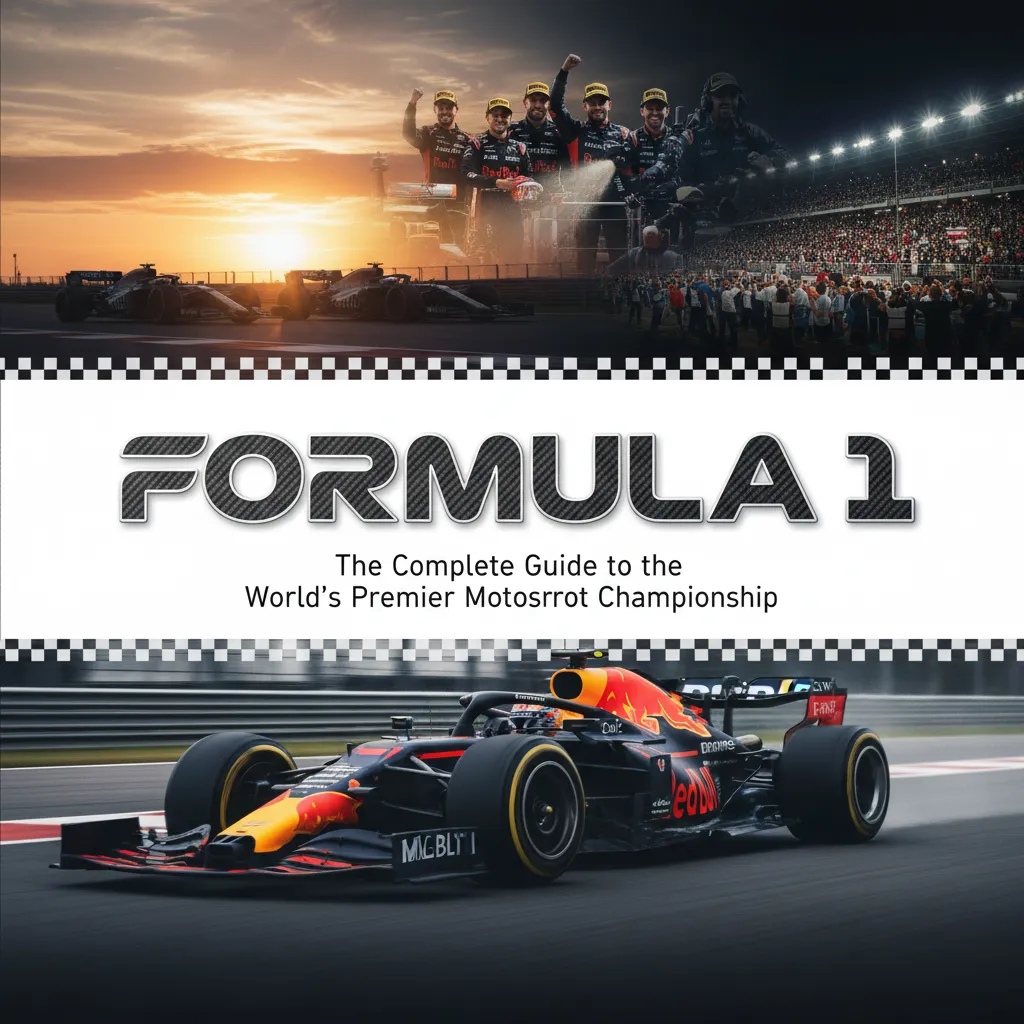
Formula 1 represents the pinnacle of motorsport racing, where cutting-edge technology meets human skill at speeds exceeding 230 mph. Whether you’re a newcomer curious about what makes F1 the world’s most-watched racing series or a dedicated fan seeking deeper insights into the 2026 season, this comprehensive guide covers everything from championship rules and team dynamics to race schedules and viewing options.
As the most prestigious open-wheel racing competition globally, Formula 1 has evolved from its 1950 origins into a multi-billion dollar sport featuring 10 teams, 20 elite drivers, and approximately 24 races across five continents. The F1 World Championship determines both the best driver and the best constructor (team) through a meticulously designed points system that rewards consistency, speed, and strategic excellence.
With recent regulatory changes, new racing circuits, and emerging driver talents reshaping the competitive landscape, understanding Formula 1 has never been more relevant for sports enthusiasts worldwide.
What Is Formula 1 Racing?
Formula 1 (F1) is the highest class of international racing for single-seater formula racing cars, sanctioned by the Fédération Internationale de l’Automobile (FIA). The term “formula” refers to the set of strict technical regulations that all participants’ cars must comply with, ensuring competition remains focused on engineering excellence and driver skill.
Each F1 season consists of a series of races called Grands Prix, held on purpose-built circuits and closed public roads around the world. From the glamorous streets of Monaco to the high-speed straights of Monza, each circuit presents unique challenges that test both machine and driver to their absolute limits.
Key Components of Formula 1:
The Cars: Modern F1 cars are technological marvels featuring hybrid power units that combine a 1.6-liter turbocharged V6 engine with sophisticated energy recovery systems. These machines generate over 1,000 horsepower while incorporating advanced aerodynamics, including front and rear wings, diffusers, and the innovative DRS (Drag Reduction System) for overtaking.
The Teams: Ten constructors compete in F1, each fielding two cars per race. Teams like Ferrari, Mercedes-AMG Petronas, Red Bull Racing, and McLaren invest hundreds of millions annually in car development, employing thousands of engineers, mechanics, and support staff.
The Drivers: Twenty of the world’s most skilled racing drivers compete for the coveted Drivers’ Championship. Icons like Max Verstappen and Lewis Hamilton represent the current generation of talent, combining lightning-fast reflexes with strategic thinking and physical endurance.
The Races: Each Grand Prix weekend typically spans three days, featuring practice sessions on Friday, qualifying on Saturday to determine grid positions, and the main race on Sunday. Races cover approximately 305 kilometers (190 miles), except Monaco at 260 kilometers.
How Does Formula 1 Championship Work?
The F1 World Championship operates on a dual-competition system, awarding separate titles for drivers and constructors based on points accumulated throughout the season.
Points System Explained:
Race finishing positions earn points as follows:
- 1st place: 25 points
- 2nd place: 18 points
- 3rd place: 15 points
- 4th place: 12 points
- 5th place: 10 points
- 6th place: 8 points
- 7th place: 6 points
- 8th place: 4 points
- 9th place: 2 points
- 10th place: 1 point
Additionally, the driver who sets the fastest lap during the race receives 1 bonus point, provided they finish in the top 10 positions.
Sprint Race Format:
Select Grand Prix weekends feature Sprint races—shorter 100-kilometer events held on Saturday. The top eight finishers earn points (8-7-6-5-4-3-2-1), and the Sprint winner starts Sunday’s main race from pole position.
Championship Determination:
The driver accumulating the most points across all races wins the Drivers’ Championship. For the Constructors’ Championship, teams combine points earned by both their drivers throughout the season, with the highest-scoring team claiming the title.
Formula 1 Teams and Drivers 2026
The 2026 F1 season features ten constructors, each representing unique engineering philosophies and racing heritage:
Current F1 Teams (2026):
Red Bull Racing: The dominant force of recent seasons, powered by Honda RBPT engines and led by championship contenders.
Mercedes-AMG Petronas Formula One Team: Eight-time Constructors’ Champions known for technical innovation and consistent performance.
Scuderia Ferrari: The sport’s oldest and most successful team with unmatched racing pedigree since 1950.
McLaren Formula 1 Team: Historic British constructor experiencing resurgence with competitive machinery and young talent.
Aston Martin Aramco Cognizant F1 Team: Ambitious outfit investing heavily in facilities and personnel to challenge for victories.
Alpine F1 Team: French manufacturer team developing proprietary power units and nurturing driver academy talents.
Williams Racing: Legendary constructor rebuilding toward former championship-winning glory.
Alfa Romeo F1 Team Stake: Swiss-based team with technical partnerships supporting development progress.
Haas F1 Team: American entry focusing on cost-effective operations while competing with established rivals.
Scuderia AlphaTauri (RB): Red Bull’s sister team serving as talent development platform for future champions.
Top Drivers to Watch (2026):
The current grid showcases exceptional talent spanning multiple generations. Established champions continue competing against hungry young drivers eager to claim their first title, creating compelling narratives throughout the season.
Formula 1 Race Schedule and Calendar
The 2026 F1 calendar features approximately 24 Grand Prix events spanning March through November, visiting iconic circuits and emerging motorsport markets across six continents.
Classic Circuit Highlights:
Monaco Grand Prix (Monte Carlo): The most prestigious race, threading through narrow street circuits requiring ultimate precision and concentration.
British Grand Prix (Silverstone): Historic home of British motorsport featuring high-speed corners and passionate crowds.
Italian Grand Prix (Monza): The “Temple of Speed” where cars reach maximum velocities on long straights.
Belgian Grand Prix (Spa-Francorchamps): Challenging 7-kilometer circuit famous for unpredictable weather and dramatic elevation changes.
Singapore Grand Prix: Spectacular night race illuminated against the city skyline, testing driver endurance in tropical humidity.
New and Returning Venues:
The FIA continues expanding F1’s global footprint by introducing races in emerging markets while preserving traditional European strongholds. Recent additions include Las Vegas and Saudi Arabian street circuits, attracting new audiences to the sport.
Race weekends typically begin Friday with two 60-minute practice sessions, continue Saturday with final practice, qualifying, and possibly a Sprint race, culminating in Sunday’s Grand Prix main event.
How to Watch Formula 1 Live
Formula 1 broadcasts reach over 180 countries through various platforms, ensuring global accessibility for millions of fans.
Official Streaming Options:
F1 TV Pro: The sport’s official streaming service offers live race coverage, onboard cameras, team radios, timing data, and extensive archive content. Subscription pricing varies by region with monthly and annual plans available.
Regional Broadcasters:
Different territories feature exclusive broadcast partnerships:
- United States: ESPN networks provide commercial-free coverage
- United Kingdom: Sky Sports F1 offers dedicated channel with expert analysis
- Europe: Various national broadcasters including RTL, Canal+, and Movistar
- Asia-Pacific: Fox Sports, SuperSport, and regional providers
- Middle East: BeIN Sports networks
Free-to-Air Options:
Select markets maintain free-to-air agreements ensuring accessible F1 coverage through traditional television networks, though often limited to delayed highlights rather than live broadcasts.
Digital Engagement:
Beyond live viewing, the official Formula 1 website and mobile app provide real-time timing, driver tracking, news updates, and exclusive content enhancing the fan experience between races.
Formula 1 vs Formula 2: Understanding the Differences
While both series race open-wheel single-seaters, significant distinctions separate Formula 1 from its primary feeder series, Formula 2.
Performance and Technology:
F1: Cutting-edge hybrid power units producing 1,000+ horsepower, unlimited development budgets, team-specific car designs, and advanced aerodynamics reaching speeds over 230 mph.
F2: Spec chassis and engines (identical for all teams) producing approximately 620 horsepower, controlled costs promoting driver skill emphasis, and top speeds around 210 mph.
Career Pathway:
Formula 2 serves as the principal training ground for future F1 drivers. Recent F2 champions like Oscar Piastri and Nyck de Vries graduated directly to F1 seats, demonstrating the series’ effectiveness in developing talent.
Race Format:
F2 weekends feature three races—Sprint Race 1, Sprint Race 2, and a Feature Race—providing more competitive opportunities for drivers to showcase abilities to watching F1 teams.
Budget and Operations:
F1 teams operate with $135-150 million annual budgets under cost cap regulations, while F2 teams function with significantly reduced resources, approximately $3-5 million per season.
Formula 1 Technology and Innovation
Modern F1 cars represent automotive engineering’s absolute cutting edge, pioneering technologies that eventually influence road car development.
Hybrid Power Units:
Since 2014, F1 has utilized 1.6-liter V6 turbocharged engines combined with two energy recovery systems (ERS):
MGU-K (Motor Generator Unit – Kinetic): Recovers energy during braking, converting kinetic energy into electrical power stored in batteries for later deployment.
MGU-H (Motor Generator Unit – Heat): Harvests energy from exhaust gases, improving efficiency while reducing turbo lag.
This hybrid technology achieves over 50% thermal efficiency—significantly exceeding typical road car engines—while delivering explosive performance.
Aerodynamics:
F1 cars generate enormous downforce through sophisticated aerodynamic designs:
- Front and rear wings create low-pressure zones pulling cars toward the track
- Underfloor diffusers accelerate air beneath the car, generating ground effect
- DRS (Drag Reduction System) opens rear wing elements to reduce drag during overtaking
Wind tunnel testing and computational fluid dynamics (CFD) simulations optimize every surface for maximum performance.
Materials Science:
Carbon fiber monocoques provide exceptional strength-to-weight ratios, protecting drivers during high-speed impacts. Advanced materials including titanium, aluminum alloys, and exotic composites reduce weight while maintaining structural integrity.
Data Analytics:
Teams collect thousands of data points per second from hundreds of sensors, analyzing performance in real-time. This telemetry informs strategic decisions on tire management, fuel loads, and setup adjustments.
Famous Formula 1 Circuits Around the World
F1’s global calendar features diverse circuits, each with unique characteristics testing different aspects of car and driver performance.
Street Circuits:
Monaco (Circuit de Monaco): Narrow 3.3-kilometer layout through Monte Carlo streets where walls punish mistakes and overtaking proves nearly impossible. Qualifying position critically determines race outcome.
Singapore (Marina Bay Street Circuit): Tropical heat, humidity, and night racing under floodlights create physically demanding conditions across 23 challenging corners.
Baku (Baku City Circuit): Contrasting tight old-town sections with high-speed straights along the Caspian Sea waterfront.
Purpose-Built Racing Circuits:
Silverstone (United Kingdom): High-speed corners like Copse, Maggots/Becketts complex, and historic atmosphere make this a driver favorite.
Suzuka (Japan): Figure-eight layout featuring the challenging 130R corner and first-sector esses demanding precise car balance.
Spa-Francorchamps (Belgium): Legendary 7-kilometer circuit with dramatic Eau Rouge/Raddillon complex and unpredictable Ardennes weather.
High-Speed Venues:
Monza (Italy): Minimal downforce setup prioritizes straight-line speed, with cars approaching 230 mph before heavy braking for chicanes.
Red Bull Ring (Austria): Compact layout featuring steep elevation changes and overtaking opportunities into Turns 1, 3, and 4.
Best Formula 1 Drivers of All Time
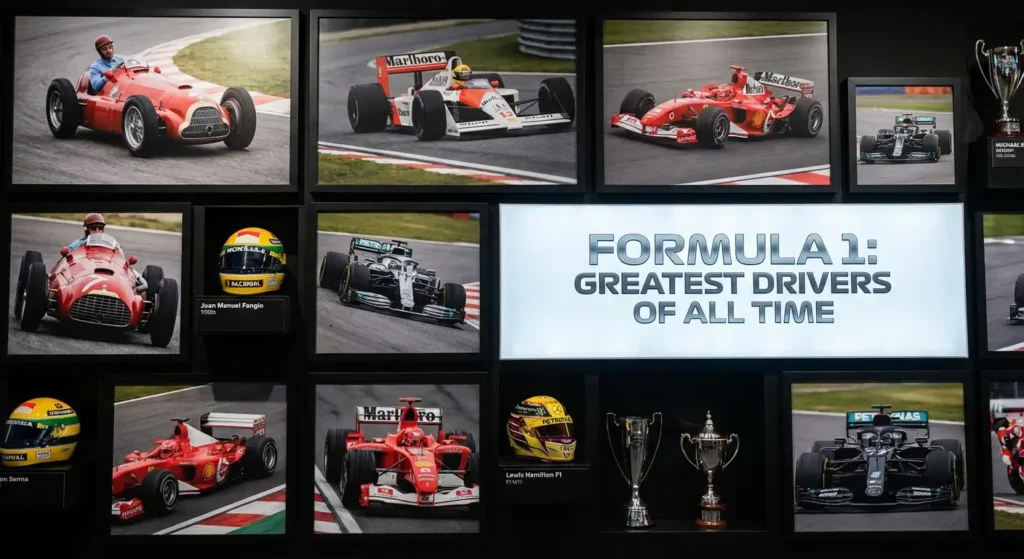
Formula 1’s 73-year history showcases extraordinary talent, with certain drivers transcending their era to achieve legendary status.
Championship Records:
Lewis Hamilton (7 World Championships): Tied with Michael Schumacher for most titles, Hamilton holds records for most wins (103), pole positions (104), and podium finishes (197). His combination of raw speed, racecraft, and consistency defines modern F1 excellence.
Michael Schumacher (7 World Championships): Dominated the early 2000s with Ferrari, revolutionizing driver fitness, testing dedication, and technical feedback that elevated team performance.
Juan Manuel Fangio (5 World Championships): 1950s legend who won titles with four different constructors, demonstrating exceptional adaptability across eras.
Alain Prost (4 World Championships): “The Professor” earned respect for strategic intelligence and smooth driving efficiency.
Sebastian Vettel (4 World Championships): Red Bull’s youngest-ever champion who secured four consecutive titles (2010-2013) with dominant machinery.
Modern Era Champions:
Max Verstappen: Current championship leader known for aggressive overtaking, exceptional racecraft under pressure, and consistent qualifying pace.
Fernando Alonso: Two-time champion whose longevity and speed across different regulations demonstrate extraordinary talent and commitment.
Racing Legends Without Championships:
Stirling Moss: Widely considered the greatest driver never to win a championship, finishing runner-up four times while competing against superior machinery.
Gilles Villeneuve: Ferrari icon whose fearless driving style and spectacular overtakes captivated fans despite limited title success.
Formula 1 Rules and Regulations
The FIA implements comprehensive technical and sporting regulations ensuring competitive balance, safety, and cost control.
Technical Regulations:
Dimensions: Maximum width 2,000mm, maximum length varies, minimum weight 798kg (including driver)
Power Units: 1.6L turbocharged V6 hybrid engines with MGU-K and MGU-H energy recovery, fuel flow limited to 100kg/hour
Aerodynamics: Strict regulations on wing dimensions, ground effect aerodynamics, and DRS activation zones
Tires: Pirelli supplies five dry compound specifications (C1-C5 from hardest to softest) plus intermediate and wet-weather tires
Sporting Regulations:
Parc Fermé: Cars remain locked under FIA supervision between qualifying and race, preventing setup changes
Penalties: Time penalties, grid drops, or disqualifications for rule violations including track limits, unsafe releases, and collision responsibility
Safety Car and Virtual Safety Car: Deployed during dangerous track conditions, requiring drivers to maintain reduced speeds
Flags: Color-coded signals communicate track conditions—yellow for danger, red for stopped session, blue for faster cars approaching, checkered for race completion
Cost Cap:
Since 2021, teams operate under a $135-140 million annual budget cap (excluding driver salaries, top three employee salaries, and marketing costs), promoting competitive balance between wealthy and modest teams.
How to Become a Formula 1 Driver
Reaching F1 requires exceptional talent, substantial financial backing, and strategic career progression through junior formulas.
The Traditional Pathway:
Karting (Ages 6-16): Most F1 drivers begin in competitive karting, developing racecraft fundamentals, reflexes, and competitive instinct through regional, national, and international championships.
Formula 4 (Ages 15-18): First step into single-seater racing, providing transition from karts to slick-tire, wings-and-slicks formula cars.
Formula 3 (Ages 17-20): European and regional F3 championships showcase talent to F1 teams’ junior academies and scout programs.
Formula 2 (Ages 19-23): Direct F1 feeder series where championship performance typically determines promotion opportunities.
Requirements Beyond Speed:
Super License: FIA-issued credential requiring accumulation of 40 points through junior formula results over three years, minimum age 18, and extensive testing mileage.
Physical Fitness: Elite cardiovascular conditioning, neck strength for high G-forces, reaction times, and mental endurance for 2-hour races in extreme heat.
Financial Support: Junior racing costs range from $500,000 annually in F4 to $2+ million in F2, necessitating sponsorship or academy backing.
Technical Knowledge: Modern drivers function as development drivers, providing detailed feedback on car behavior and setup preferences.
Driver Academies:
Most F1 teams operate young driver programs identifying and developing talent:
- Mercedes Junior Team
- Red Bull Junior Team
- Ferrari Driver Academy
- McLaren Driver Development Programme
Academy members receive financial support, coaching, simulator time, and promotional pathways to F1 seats.
Formula 1 and Sustainability
F1 has committed to achieving net-zero carbon emissions by 2030 through comprehensive environmental initiatives.
Hybrid Technology Leadership:
Current power units represent the world’s most efficient internal combustion engines, achieving over 50% thermal efficiency compared to approximately 30% in standard road cars. This technology directly influences hybrid development for consumer vehicles.
Sustainable Fuels:
By 2026, F1 mandates 100% sustainable fuels—fully drop-in compatible biofuels produced from waste products, biomass, or captured carbon. This development accelerates sustainable fuel adoption across transportation sectors.
Logistics Optimization:
The sport analyzes and optimizes freight, travel, and logistics operations to minimize carbon footprint. Regional race clustering reduces intercontinental transport between events.
Renewable Energy:
Circuits transition to renewable energy sources for power generation, while teams invest in sustainable facilities and manufacturing processes.
Recycling and Circular Economy:
Teams reuse, recycle, and responsibly dispose of materials including tires, carbon fiber components, and mechanical parts, implementing circular economy principles.
Pros and Cons of Formula 1 Racing
Pros:
✅ Technological Innovation: F1 drives automotive advancement in hybrid systems, aerodynamics, materials science, and safety technology that benefits consumer vehicles
✅ Global Entertainment: Provides thrilling competition across diverse international venues, showcasing different cultures while promoting motorsport globally
✅ Driver Excellence: Features the world’s most skilled racing drivers performing at human performance limits
✅ Engineering Marvel: Demonstrates peak engineering capability through sophisticated machines representing automotive development pinnacle
✅ Economic Impact: Generates billions in economic activity through race hosting, tourism, employment, and technology sector growth
✅ Career Pathways: Creates professional opportunities for drivers, engineers, mechanics, strategists, and media professionals
Cons:
❌ High Costs: Prohibitive expenses limit accessibility for talented drivers without substantial financial backing
❌ Environmental Concerns: Despite sustainability efforts, the sport’s global travel and resource consumption generate significant carbon footprint
❌ Competitive Imbalance: Wealthier teams traditionally dominate, though recent cost cap regulations aim to improve parity
❌ Limited Overtaking: Modern aerodynamics create dirty air, making overtaking difficult on certain circuits
❌ Accessibility: Premium ticket prices and exclusive hospitality limit in-person attendance for average fans
❌ Safety Risks: While dramatically improved through decades of safety innovation, inherent danger remains at extreme speeds
Formula 1 Buying Guide: Tickets, Merchandise, and Experiences
For fans wanting to engage beyond television viewing, F1 offers various commercial opportunities.
Grand Prix Tickets:
General Admission: Entry-level tickets ($100-$500) provide access to designated viewing areas, typically hillsides or standing zones with partial track views
Grandstand Seats: Reserved seating ($300-$2,000) at specific corners offering better sightlines, particularly at key overtaking zones
Paddock Club: Premium hospitality ($3,000-$10,000+) including gourmet dining, open bars, pit lane walks, and driver appearances
Three-Day Passes vs. Single Day: Weekend passes cover Friday practice, Saturday qualifying, and Sunday race, offering better value than race-day-only tickets
Official Merchandise:
Team Apparel: Replica team shirts, jackets, and caps allow fans to support favorite constructors
Driver Merchandise: Personalized items featuring driver numbers, signatures, and branding
Die-Cast Models: Detailed 1:18 or 1:43 scale replicas of F1 cars from current and historic seasons
Collectibles: Limited edition prints, signed memorabilia, and championship commemorative items
F1 Experiences:
Factory Tours: Select teams offer guided tours of facilities, though availability is extremely limited
Simulator Experiences: Commercial F1 simulators at circuits and entertainment venues let enthusiasts experience virtual racing
Paddock Access Packages: VIP experiences including pit lane walks, garage tours, and meet-and-greets with team personnel
External Sources
- FIA Official Website – Governing body regulations and announcements
- Formula 1 Official Site – Official news, schedules, and standings
- Autosport – Professional motorsport journalism and analysis
- Motorsport.com – Comprehensive racing news coverage
- RaceFans (F1 Fanatic) – Independent F1 analysis and statistics
- The Race – Expert technical and strategic commentary
Frequently Asked Questions
What does Formula 1 mean?
Formula 1 refers to a set of strict technical rules (“formula”) that all participating cars must follow. The “1” denotes it as the highest class of international racing sanctioned by the FIA, representing the pinnacle of motorsport competition.
How fast do Formula 1 cars go?
Modern F1 cars reach top speeds exceeding 230 mph (370 km/h) on long straights like Monza and Baku. Average race speeds vary by circuit, typically ranging from 140-165 mph depending on track layout and corner frequency.
How many races are in a Formula 1 season?
The 2026 F1 calendar features approximately 24 Grand Prix races spanning March through November. The exact number varies annually based on new circuit additions, contract renewals, and schedule adjustments.
Who is the best Formula 1 driver ever?
While subjective, Lewis Hamilton and Michael Schumacher share the record with seven World Championships each. Other candidates include Juan Manuel Fangio (5 titles), Ayrton Senna (3 titles renowned for raw speed), and Jim Clark (2 titles with exceptional versatility).
How much does a Formula 1 car cost?
A complete F1 car costs approximately $12-15 million, including chassis, power unit, electronics, and components. The most expensive single element is the power unit at around $10-12 million for the season’s allocation.
Can anyone buy a Formula 1 car?
While teams occasionally sell older chassis to collectors, modern F1 cars are not available for public purchase. Buyers must negotiate directly with teams, and prices for historic cars range from $500,000 to several million depending on provenance and success.
How do Formula 1 drivers stay fit?
F1 drivers maintain rigorous training regimens including cardiovascular exercise, strength training (especially neck muscles for G-forces), reaction time drills, heat acclimatization, and strict nutritional programs. Most drivers work with dedicated performance coaches and physiotherapists.
What is DRS in Formula 1?
DRS (Drag Reduction System) is an adjustable rear wing element drivers can activate in designated track zones when within one second of the car ahead. Opening the DRS reduces drag, increasing straight-line speed by 10-15 km/h to facilitate overtaking.
How long is a Formula 1 race?
F1 races cover approximately 305 kilometers (190 miles), except Monaco at 260 kilometers. Most races last 1.5 to 2 hours, with a maximum time limit of 3 hours including red flag stoppages. Races typically complete 50-70 laps depending on circuit length.
Why is Monaco Grand Prix so special?
The Monaco Grand Prix holds unique prestige as F1’s most glamorous event, racing through narrow Monte Carlo streets since 1929. Its combination of history, difficulty, exclusivity, celebrity attendance, and minimal overtaking opportunities makes pole position critically important.
Key Takeaways
🏁 Formula 1 is the world’s premier motorsport championship, featuring 10 teams, 20 elite drivers, and cutting-edge hybrid technology competing across approximately 24 global races annually.
🏆 The championship awards separate titles for drivers and constructors using a points-based system where consistency, speed, and strategic execution determine success over a season-long competition.
🚗 Modern F1 cars are technological marvels producing over 1,000 horsepower through hybrid power units achieving over 50% thermal efficiency while reaching speeds exceeding 230 mph.
📺 Multiple viewing options exist globally, including F1 TV Pro streaming service, regional broadcasters like ESPN and Sky Sports, and official digital platforms providing real-time data and exclusive content.
♻️ F1 is committed to achieving net-zero carbon emissions by 2030 through sustainable fuel development, hybrid technology leadership, and comprehensive environmental initiatives across operations and logistics.
Conclusion
Formula 1 represents far more than racing—it embodies human ambition, engineering excellence, and competitive spirit at their absolute pinnacle. From the thunderous roar of hybrid power units to the strategic chess matches played at 200 mph, F1 delivers unparalleled entertainment while driving technological innovation that benefits society beyond the racetrack.
Whether you’re captivated by driver battles, fascinated by cutting-edge technology, or drawn to the global spectacle of Grand Prix weekends, Formula 1 offers something for every motorsport enthusiast. As the 2026 season unfolds with new regulations, emerging talents, and legendary circuits, there’s never been a more exciting time to engage with the sport.
Ready to experience the thrill firsthand? Explore upcoming race schedules, secure tickets to your nearest Grand Prix, or dive deeper into team and driver analysis to enhance your F1 knowledge and appreciation.







Leave a Reply