

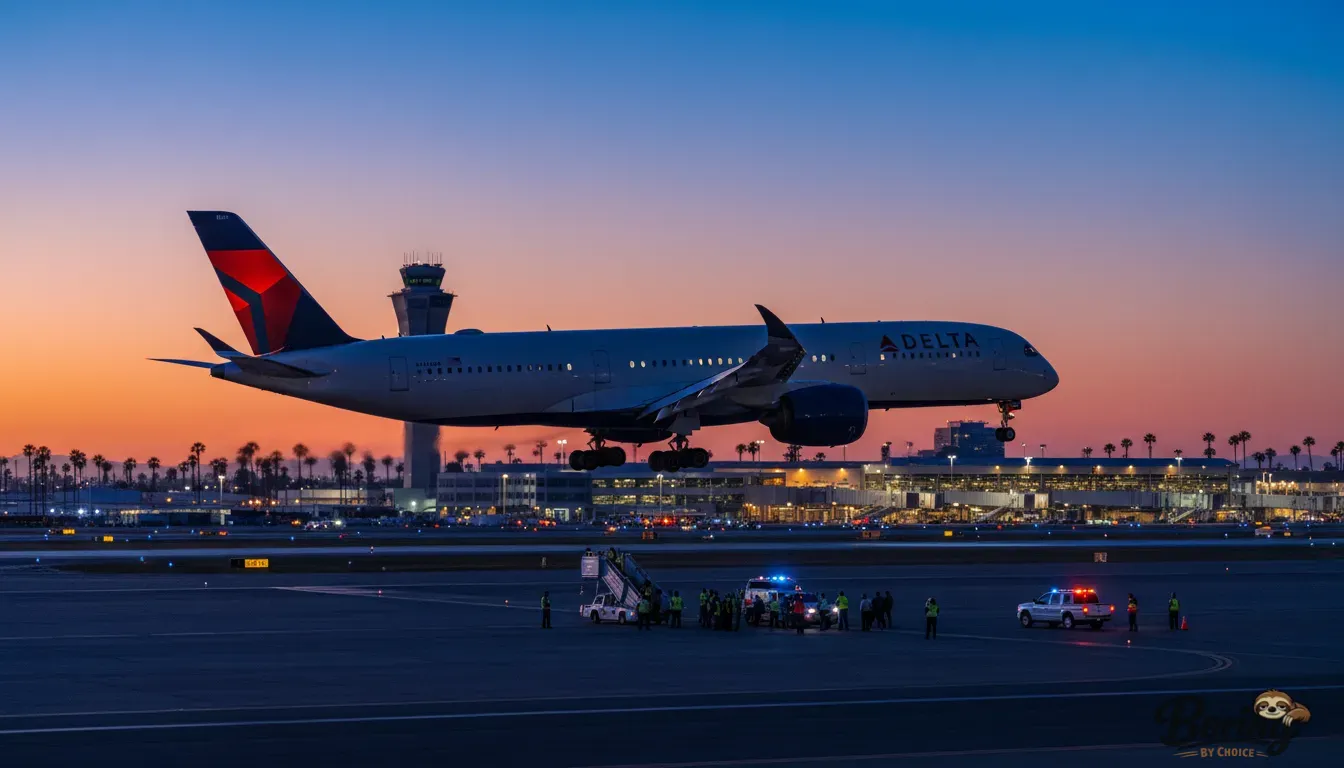
Delta Flight DL275 diverted LAX on May 27 2025 after pilots detected a mechanical fault with the engine anti-ice system during a long-haul flight from Detroit to Tokyo Haneda. The Airbus A350 had already traveled nearly 12 hours over the Pacific route near the Bering Sea when the crew made a precautionary landing decision. No passengers were injured and the flight diversion followed every standard aviation safety protocol perfectly. This incident stands as a clear example of how crew training and quick pilot decision making keep millions of travelers safe every single year.
What Triggered the Flight Diversion
The engine anti-ice system is a critical component that prevents ice buildup on engine surfaces during cruise altitude in freezing airspace conditions. When this mechanical issue appeared over the Pacific route near Alaska, the flight crew had no safe option but to act immediately. A precautionary diversion was the only responsible choice given the long distance remaining to Tokyo Haneda. The captain communicated calmly with passengers while ground teams at LAX were alerted and prepared for arrival. Delta Airlines followed every controllable delay procedure and aviation safety standard without hesitation.
Flight Path and Timeline of DL275
The flight path originally stretched from Detroit across the northern Pacific toward Tokyo Haneda. Strong headwinds pushed the route further north near Bering Sea airspace before the engine fault appeared. Flight trackers quickly picked up the unusual directional change as the Airbus A350 turned southeast toward California. After five additional hours in the air the aircraft completed a safe landing at LAX around 1:38 AM local time on May 28. The full flight timeline showed nearly 17 hours of total air time before the plane reached the diversion airport. Aviation enthusiasts and worried family members followed every update live through flight tracker platforms throughout the night.
How the Flight Crew Managed Passengers
Flight attendants played a massive role in keeping the mood stable during the unexpected turn. The crew decision to divert was matched with clear and honest communication every step of the way. Passengers received regular updates from both the captain and cabin crew during the long journey to LAX. Most travelers responded with patience and even praised the pilot decision making after landing. Some passengers shared stories of extra meals, friendly conversations and a strange sense of group bonding during those extra hours in the air. The overnight accommodation and meal vouchers provided by Delta Airlines after landing helped ease frustration for those facing missed connections and rebooked flights.
Why Los Angeles Was the Right Diversion Airport
LAX was the strongest choice as a diversion airport for several practical reasons tied to both safety and logistics. The airport offers world class maintenance facilities capable of handling widebody jets like the Airbus A350 with ease. Ground teams were available immediately and runway accommodation for large international aircraft is never an issue at LAX. Weather conditions in Los Angeles that night were clear which removed any additional risk during approach and landing. Returning to Detroit would have added unnecessary flight time while continuing to Tokyo Haneda was simply not safe given the mechanical issue at hand. The crew decision to land at LAX balanced distance, maintenance facilities and passenger safety perfectly.
Passenger Rights and Airline Support After Landing
Delta Airlines moved quickly to support everyone affected by the Delta Flight DL275 LAX diversion. Because the cause was a mechanical fault which counts as a controllable delay under airline compensation rules, passengers qualified for a full range of support. Hotel vouchers and meal vouchers were distributed promptly at the airport. Rebooking on the next available flights to Tokyo Haneda happened without additional charges. Support desks handled luggage questions, missed connection claims and airline compensation inquiries throughout the night and into the following morning. Most travelers were back in the air toward their original destination within 24 hours. The swift airline support response helped rebuild confidence and showed Delta Airlines taking passenger rights seriously from the moment of landing.
What Aviation Safety Lessons This Event Teaches
Delta Flight DL275 diverted LAX is now a useful real world example discussed in aviation safety circles. The event shows that crew training for rare in-flight mechanical issues genuinely works when put to the test. Pilots detected the engine anti-ice system fault early enough to make a calm and calculated precautionary diversion rather than facing a more serious situation over open ocean. Flight safety depends on constant monitoring, honest communication and the willingness to prioritize a safe landing over schedule pressure. This incident reinforces why aviation remains one of the safest forms of long-haul travel in the world today. Passengers who fly regularly can take confidence from knowing that flight crew and ground teams train specifically for moments exactly like this one.
FAQs
What caused Delta Flight DL275 to divert to LAX?
A mechanical fault with the engine anti-ice system forced a precautionary landing at LAX during a flight from Detroit to Tokyo Haneda.
When did Delta Flight DL275 divert to LAX?
The diversion happened on May 27 2025 with landing at LAX around 1:38 AM on May 28 2025.
Was anyone hurt during the Delta Flight DL275 LAX diversion?
No injuries occurred. The safe landing went smoothly and all passengers were accounted for.
Why did the flight divert to LAX instead of returning to Detroit?
LAX offered closer distance, better maintenance facilities and strong widebody jet support making it the smartest diversion airport choice.
Did Delta Airlines compensate passengers after the diversion?
Yes. Delta provided hotel vouchers, meal vouchers, free rebooking and full airline support for all affected travelers right away.
Is flying still safe after incidents like this?
Absolutely. Events like this actually prove aviation safety protocols work exactly as designed keeping passengers protected at all times.
Finding Comfort After Delta Flight DL275 Diverted LAX
Unexpected travel disruptions like the Delta Flight DL275 LAX diversion can leave passengers feeling frustrated, exhausted and emotionally drained. Spending nearly 17 hours in the air only to land somewhere completely different than planned tests even the most experienced traveler’s patience. Those feelings are completely valid and understandable.
However it helps to step back and recognize what truly happened that night. A skilled flight crew detected a mechanical fault early, made a calm pilot decision under pressure and delivered every single passenger to the ground safely. That is not a failure. That is aviation safety working exactly as it should.
The engine anti-ice system fault could have been ignored in favor of staying on schedule. It was not. The crew chose people over punctuality every step of the way. Delta Airlines then followed through with hotel vouchers, meal vouchers, rebooking support and genuine airline assistance throughout the night.
Yes plans changed. Yes connections were missed. But everyone went home. Every passenger walked off that Airbus A350 safely and continued their journey. In travel as in life sometimes the detour is actually proof that someone was watching out for you the entire time.











Leave a Reply