


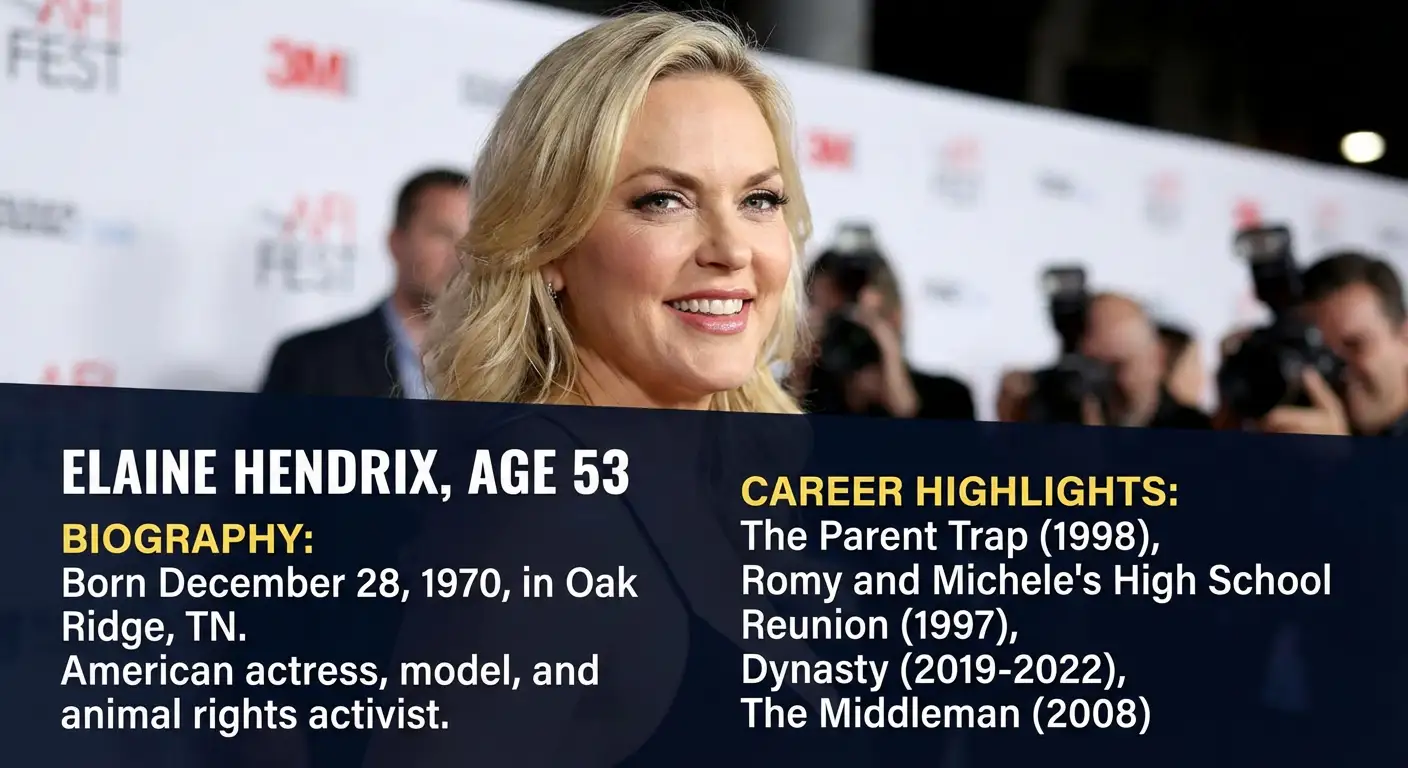
The year 1998 marked a significant turning point in the landscape of family cinema with the release of Nancy Meyers’ remake of The Parent Trap. While the film was ostensibly a vehicle for the burgeoning stardom of a young Lindsay Lohan, it inadvertently birthed one of the most enduring and polarizing figures in modern pop culture: Meredith Blake. Portrayed with razor-sharp precision by Elaine Hendrix, Meredith Blake was designed to be the quintessential antagonist—the “gold-digging” publicist standing in the way of a heartwarming family reunion. However, in the decades since the film’s release, the character has undergone a profound cultural reassessment. Through Hendrix’s nuanced performance, Meredith Blake has transitioned from a cartoonish villain into a symbol of feminine ambition, impeccable style, and misunderstood independence.
The Architect of the Antagonist: Hendrix’s Performance
To understand why Meredith Blake remains a fixture of internet memes and fashion mood boards, one must first look at the craft Elaine Hendrix brought to the role. At twenty-six years old, Hendrix was tasked with playing a character who was supposed to be the “other woman,” a foil to the warm, ethereal Elizabeth James (Natasha Richardson). Hendrix avoided the trap of making Meredith a one-dimensional shrew. Instead, she leaned into a specific brand of sophisticated, chilly charisma.
Hendrix’s performance is a masterclass in physicality. Every movement—the way she snaps her designer sunglasses shut, the practiced tilt of her head during a conversation with Nick Parker (Dennis Quaid), and her clinical, detached interactions with the twins—conveys a woman who is hyper-aware of her image and her goals. Hendrix utilized a vocal fry and a deliberate cadence that signaled both wealth and impatience. By playing Meredith with such conviction, Hendrix created a character that audiences loved to hate, yet could not help but admire for her sheer competence and refusal to apologize for her presence.
The Visual Language of Meredith Blake
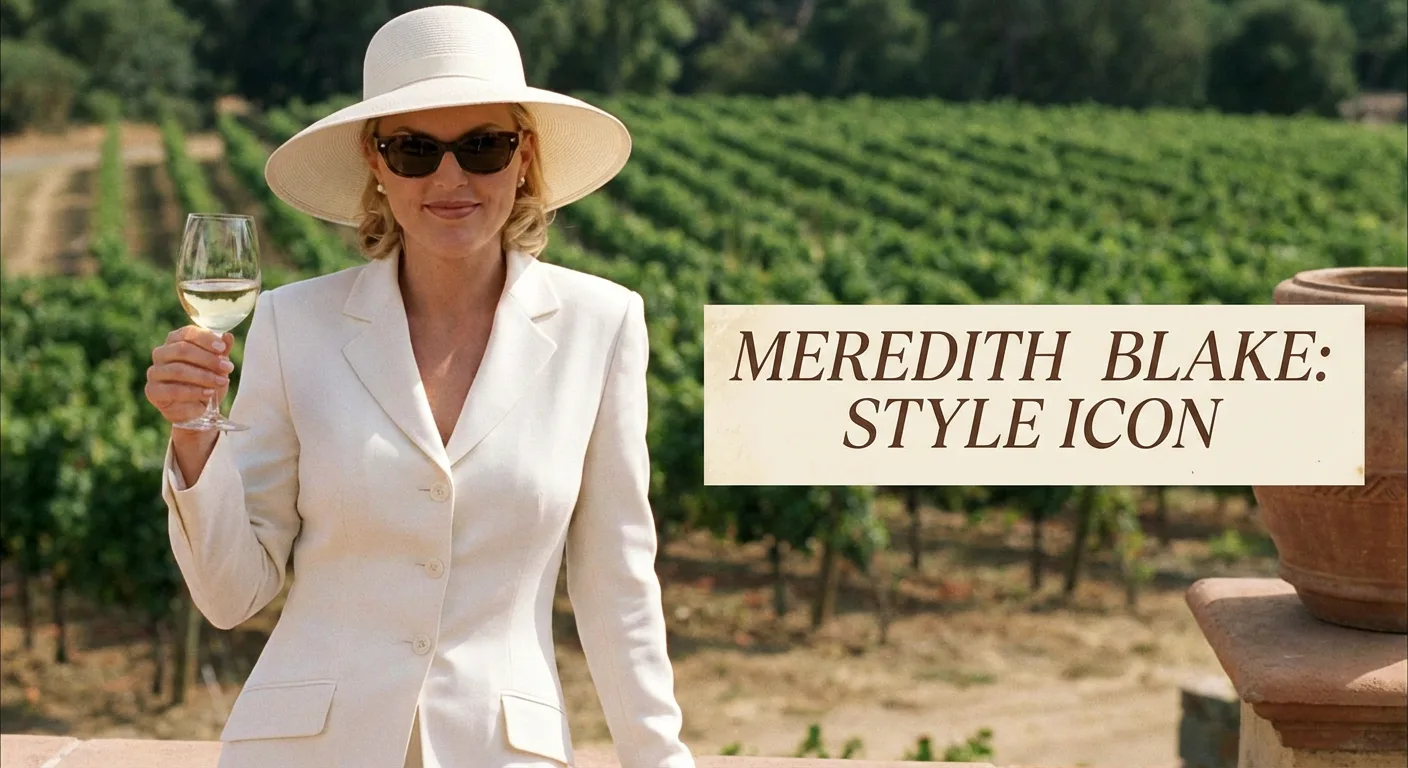
A significant portion of Meredith’s lasting impact can be attributed to the film’s costume design and Hendrix’s ability to “wear” the character’s wardrobe. In the world of The Parent Trap, fashion is used as a narrative device to distinguish the “cool” and “natural” Elizabeth James from the “artificial” and “calculating” Meredith Blake. Yet, from a contemporary perspective, Meredith’s wardrobe is nothing short of legendary.
From the iconic black-and-white color palette to the sleek athleisure she wore during the ill-fated camping trip, Meredith Blake embodied the “90s minimalist” aesthetic that continues to influence high fashion today. Hendrix carried these outfits with a poise that made them look like armor. The oversized sun hats, the impeccably tailored suits, and the red lipstick were not just accessories; they were extensions of Meredith’s tactical approach to life. Hendrix’s ability to maintain this level of sophistication even while being pranked by eleven-year-olds—such as the famous scene where she wakes up in the middle of a lake—added a layer of physical comedy that highlighted her range as an actress.
The Generational Shift: From Villain to Icon
The most fascinating aspect of Elaine Hendrix’s legacy as Meredith Blake is the “justice for Meredith” movement that has gained momentum on social media. For the children of the late 90s, Meredith was the barrier to a happy ending. However, as that generation reached adulthood, their perspective shifted. Viewed through a modern lens, Meredith Blake is a 26-year-old woman who is successful in her career, knows exactly what she wants, and is being tormented by two children and their father’s staff.
Hendrix herself has embraced this shift with grace and humor. She frequently interacts with fans on platforms like TikTok and Twitter, leaning into the “Meredith Blake” persona to celebrate the character’s newfound status as a feminist icon of sorts. This reassessment acknowledges that while Meredith was certainly self-interested, she was also a woman navigating a world of immense wealth and patriarchal expectations. Hendrix’s portrayal allowed for this complexity; there is a visible vulnerability beneath the polished exterior, particularly in her desperation to secure her future through Nick Parker.
Behind the Scenes: The Chemistry of the Cast
While the onscreen tension between Hendrix and the rest of the cast was palpable, the offscreen reality was a stark contrast. Hendrix has often spoken about the warmth of the set and her enduring friendship with Lisa Ann Walter, who played the housekeeper, Chessy. In the film, Chessy and Meredith are natural enemies, representing the domestic heart of the home versus the intruding outsider. In reality, the two actresses became lifelong friends, a fact that delights fans and adds a layer of irony to their onscreen bickering.
This camaraderie likely contributed to the film’s quality. Hendrix has noted that Nancy Meyers encouraged a high level of professionalism and attention to detail, which allowed Hendrix to fully inhabit the role. The chemistry between Hendrix and Dennis Quaid was also vital; she had to be believable as a woman who could genuinely charm a man like Nick Parker, despite the age gap and the baggage of his past marriage. Hendrix managed to make their relationship feel like a high-stakes business transaction wrapped in the veneer of romance.
The Camping Trip: A Comedic Tour de Force
The climax of Meredith’s narrative arc occurs during the camping trip, where the twins subject her to a series of increasingly cruel pranks. It is in these sequences that Hendrix’s comedic timing truly shines. Playing the “straight man” to the twins’ antics, she captures the sheer absurdity of a city-dwelling publicist being thrust into the wilderness.
The scene where she discovers a lizard on her water bottle, or her hysterical reaction to being moved into the lake, requires a specific kind of vanity-free acting. Hendrix committed fully to the physical degradation of the character, allowing her meticulously crafted image to crumble in the face of nature and childhood malice. This descent from poise to panic is what makes Meredith’s ultimate defeat so satisfying for the plot, yet strangely sympathetic for the viewer. We see a woman completely out of her element, fighting a losing battle against two tactical geniuses.
Meredith’s Impact on the “Modern Villain” Trope
Elaine Hendrix’s performance set a standard for the “glamorous antagonist” in family films. She paved the way for future characters who were defined by their sharp wit and sharper wardrobes rather than just “evil” intentions. Meredith Blake wasn’t trying to take over the world; she was trying to secure a lifestyle. This grounded motivation, played with Hendrix’s signature steeliness, made her more realistic—and therefore more memorable—than many other cinematic villains of the era.
Furthermore, the character challenged the notion that a woman must be maternal to be “good.” Meredith’s blatant lack of maternal instinct was presented as her greatest flaw in 1998. Today, it is often viewed as a valid, if harshly communicated, lifestyle choice. Hendrix’s refusal to soften Meredith’s edges in the final act preserved the character’s integrity. She didn’t have a change of heart; she was simply outmaneuvered, and she exited the film with the same fiery temper with which she entered.
Conclusion: The Enduring Charm of Elaine Hendrix
Twenty-five years later, The Parent Trap remains a staple of nostalgia, and Elaine Hendrix’s Meredith Blake is a primary reason for its longevity. Hendrix took what could have been a forgotten supporting role and turned it into a cultural touchstone. Through her impeccable style, comedic brilliance, and the ability to command every frame she occupied, she created a character that transcends the film itself.
Today, Hendrix is celebrated not just for the character she played, but for the way she has championed the character’s legacy. She reminds us that being a “Meredith Blake” isn’t about being a villain; it’s about knowing your worth, dressing for the life you want, and—occasionally—knowing when to demand that a “big brat” be sent to boarding school in Timbuktu. As long as there are viewers who appreciate a well-tailored suit and a sharp wit, Meredith Blake will continue to reign as the ultimate cinematic icon of the 90s.











Leave a Reply