

Introduction: Understanding Lower Abdominal Fat Beyond the Stigma
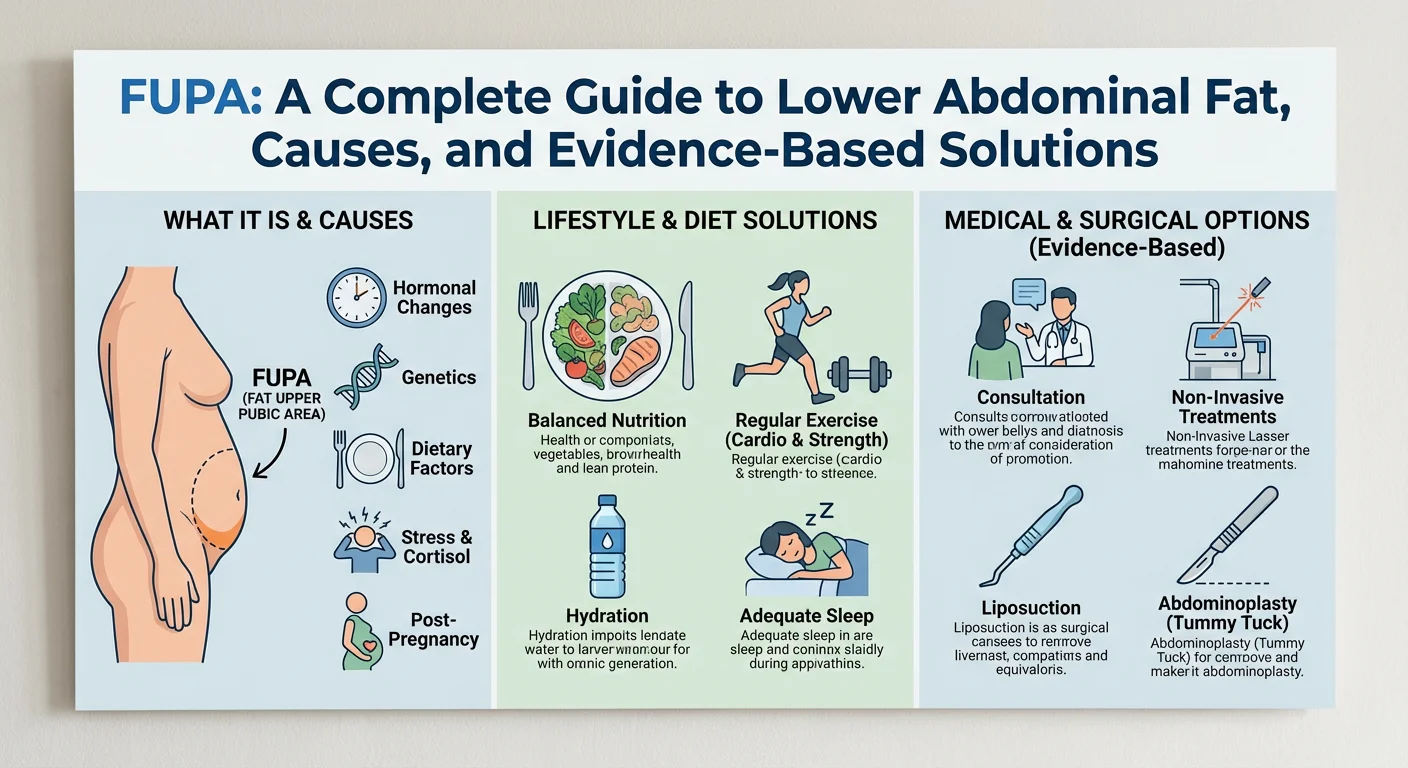
FUPA—an acronym for “Fat Upper Pubic Area”—refers to lower abdominal fat accumulation in the infraumbilical region, creating a visible lower abdominal protrusion that many people find frustrating. This subcutaneous fat deposit sits between the belly button and pelvic area, representing one of the most stubborn fat areas the human body stores.
Unlike general belly fat, lower abdominal fat responds differently to diet and exercise due to complex hormonal fat storage patterns, genetic fat distribution factors, and metabolic signaling mechanisms. Whether you’re experiencing postpartum abdominal changes, dealing with weight cycling effects, or simply noticing persistent pelvic fat despite overall fitness improvements, understanding the biological reality behind FUPA helps set realistic fat loss expectations and identify effective strategies.
This comprehensive guide explores the science of infraumbilical fat, examines why this area proves particularly resistant to traditional fat loss methods, and provides evidence-based approaches including targeted resistance training, hormone-aware fat loss strategies, non-invasive body contouring options, and health-first body image perspectives that prioritize metabolic health over appearance alone.
Key Takeaways
- FUPA refers to lower abdominal subcutaneous fat influenced by hormonal factors, genetic distribution, and metabolic signaling rather than simple caloric excess
- Estrogen-sensitive fat in the infraumbilical region responds slowly to fat loss efforts, making realistic expectations and sustainable approaches essential
- Evidence-based strategies include targeted resistance training, hormone-aware nutrition, stress management, and patience with gradual body recomposition
- Non-invasive body contouring and surgical options exist for persistent concerns but work best after achieving overall body composition goals through lifestyle
- Health-first approaches that prioritize metabolic markers, functional fitness, and body neutrality often improve wellbeing more than appearance-focused extremes
What is FUPA? Defining Lower Abdominal Fat
FUPA specifically describes the accumulation of subcutaneous fat in the lower abdomen, between the navel and pubic bone. This visual fat storage zone differs from visceral belly fat (which surrounds internal organs) and upper abdominal fat deposits.
The lower belly represents a preferential fat storage site for many individuals, particularly those with higher estrogen levels. This estrogen-sensitive fat serves biological purposes related to reproduction and hormone regulation, which partially explains why it persists even when other body areas lean out.
Understanding the fat vs skin distinction proves crucial: FUPA may involve actual fat deposits, loose skin from weight loss or pregnancy, abdominal fascia laxity, or combinations of these factors. Accurate identification determines which interventions will prove most effective.
The Science Behind Stubborn Fat Areas
Hormonal Fat Storage Mechanisms
Lower abdominal fat accumulation involves complex interactions between estrogen and insulin signaling, cortisol responses, and other metabolic hormones. Estrogen-sensitive fat cells in the pelvic region contain higher concentrations of alpha-adrenergic receptors, which inhibit fat breakdown compared to beta-adrenergic receptors found in more responsive fat deposits.
This hormonal fat storage pattern means the lower abdomen often represents the first place fat accumulates and the last place it leaves during fat loss. Cortisol and insulin signaling further complicate this process—chronic stress elevates cortisol, promoting abdominal fat storage, while insulin resistance and pelvic fat create a self-reinforcing cycle.
Genetic Fat Distribution Patterns
Genetic factors significantly influence where your body preferentially stores fat. Some individuals naturally accumulate more lower abdominal fat regardless of overall body composition, reflecting inherited metabolic and hormonal patterns.
These genetic fat distribution tendencies don’t make fat loss impossible, but they do require acknowledging that your lower abdomen may never achieve the flatness you see in genetically different individuals, even at similar body fat percentages.
Weight Cycling Effects on Fat Storage
Repeated cycles of weight loss and regain—weight cycling effects—can alter fat distribution patterns over time. Research indicates that weight cycling may preferentially increase abdominal fat storage compared to other areas, potentially making FUPA more pronounced with each diet cycle.
This reality underscores the importance of sustainable body recomposition approaches rather than extreme restriction followed by rebound weight gain.
FUPA vs General Belly Fat: Key Differences
Location and Composition
Belly fat vs FUPA represents an important distinction. General belly fat includes visceral fat surrounding organs (associated with metabolic health risks) plus subcutaneous fat across the entire abdominal region. FUPA specifically refers to the subcutaneous lower abdominal deposit.
Visceral fat responds more readily to caloric deficit and exercise than subcutaneous lower belly fat, meaning you might lose significant visceral fat while FUPA remains relatively unchanged—improving metabolic health markers even when visual appearance changes slowly.
Metabolic Health Implications
While FUPA primarily represents a cosmetic concern for most people, excessive lower belly fat can indicate broader metabolic issues. Insulin resistance and pelvic fat often correlate, as do chronic inflammation markers and stubborn abdominal deposits.
The metabolic health and lower belly fat connection means addressing FUPA through healthy lifestyle changes often improves metabolic markers even when visual changes lag behind internal improvements.
Cosmetic vs Medical Concerns
Understanding cosmetic vs medical FUPA concerns helps prioritize interventions appropriately. For most individuals, FUPA represents primarily aesthetic dissatisfaction rather than health risk. However, significant lower abdominal fat combined with metabolic syndrome, insulin resistance, or hormonal imbalances warrants medical evaluation beyond appearance considerations.
Postpartum Abdominal Changes and FUPA
Pregnancy creates unique changes to the abdominal region beyond fat accumulation. Postpartum abdominal changes include stretched abdominal muscles (diastasis recti), altered fascia structure, skin laxity, and hormonal shifts affecting fat distribution.
Postpartum fascia remodeling occurs gradually over months to years, not weeks. The connective tissue matrix supporting abdominal muscles requires time to regain structural integrity. Rushing this process with aggressive exercise or extreme dieting can impair proper healing.
Realistic postpartum expectations acknowledge that some degree of lower abdominal changes may persist permanently, representing normal anatomical variation after growing and birthing a human rather than failure to “bounce back.”
Evidence-Based Strategies for Lower Belly Shape Improvement
Targeted Resistance Training Approaches
While spot reduction remains physiologically impossible, targeted resistance training builds muscle that improves structural support for abs and can enhance lower belly appearance through better posture and core function.
Anti-extension core exercises like dead bugs, pallof presses, and planks strengthen deep abdominal muscles without excessively loading the spine. These movements create stability rather than flexion, supporting proper pelvic alignment and reducing anterior pelvic tilt that accentuates lower abdominal protrusion.
Posterior-chain strengthening through exercises like Romanian deadlifts, glute bridges, and rows addresses muscular imbalances that contribute to poor posture and pelvic positioning. Strong glutes and back muscles create better spinal alignment, reducing mechanical factors that make FUPA more visually prominent.
Fascia-Focused Training Methods
Fascia-focused training emphasizes movement quality, tissue hydration, and connective tissue health rather than just muscle building. Slow, controlled movements with emphasis on eccentric loading and full range of motion support abdominal fascia laxity improvement over time.
This approach complements traditional strength training by addressing the connective tissue matrix surrounding muscles, potentially improving skin appearance and structural support in the lower abdomen.
Low-Impact Interval Training
Low-impact interval training provides cardiovascular conditioning and metabolic benefits without excessive cortisol elevation from chronic high-intensity exercise. Walking intervals, cycling, swimming, and similar activities support moderate fat reduction while maintaining hormone balance.
Excessive high-intensity training can elevate cortisol chronically, potentially worsening stress and fat storage patterns in hormonally sensitive areas like the lower abdomen.
Nutrition Strategies for Hormone-Aware Fat Loss
Protein for Lean Mass Retention
Adequate protein intake becomes crucial during fat loss to preserve muscle mass while reducing fat. Protein for lean mass retention typically requires 0.7-1 gram per pound of target body weight, distributed across multiple meals.
Maintaining muscle mass during fat loss ensures metabolic rate remains elevated and body composition improves rather than simply becoming a smaller version of the same shape.
Timed Carbohydrate Intake Considerations
While meal timing matters less than total intake, strategic timed carbohydrate intake around training sessions can optimize hormone signaling and recovery. Concentrating carbohydrates around workouts supports performance and recovery while keeping insulin lower during sedentary periods.
This approach may modestly improve insulin resistance and pelvic fat over time, though individual responses vary considerably.
Diet and Fat Distribution Realities
No specific diet preferentially targets lower abdominal fat. However, diet and fat distribution connect through overall caloric balance, macronutrient composition, and metabolic health improvements. Anti-inflammatory whole-food diets support hormone balance and fat retention improvements more effectively than processed foods at identical calorie levels.
Sustainable eating patterns that you can maintain long-term will always outperform extreme short-term restrictions that lead to weight cycling.
Stress Management and Fat Storage
The stress and fat storage connection significantly impacts lower abdominal fat. Chronic stress elevates cortisol, which promotes abdominal fat accumulation through multiple mechanisms including increased appetite, insulin resistance, and direct signaling to fat cells.
Effective stress management through sleep optimization, meditation, time in nature, and setting appropriate boundaries often produces more visible lower belly improvements than additional exercise when stress chronically elevates cortisol.
Recognizing stress as a physiological factor rather than just psychological concern helps prioritize interventions that actually address the hormonal environment driving fat storage patterns.
Non-Invasive Body Contouring Options
Cryolipolysis (Fat Freezing)
Cryolipolysis uses controlled cooling to damage fat cells, which the body then gradually eliminates over weeks to months. This non-invasive body contouring approach can reduce lower abdominal fat by approximately 20-25% in treated areas after one to three sessions.
Results appear gradually over two to four months as the body processes damaged fat cells. Cryolipolysis works best for individuals near their goal weight with specific stubborn deposits rather than those seeking significant overall fat loss.
Radiofrequency and Ultrasound Treatments
Other non-invasive options include radiofrequency skin tightening and focused ultrasound fat reduction. These technologies address both fat reduction and skin laxity reduction, potentially improving FUPA appearance through multiple mechanisms.
Results typically require multiple sessions and prove most effective when combined with healthy lifestyle habits rather than used as standalone interventions.
Realistic Expectations for Body Contouring
Non-invasive body contouring provides modest improvements—typically 20-30% reduction in treated fat—not dramatic transformation. These treatments work best for addressing final stubborn deposits after achieving overall body composition goals through diet and exercise.
Understanding realistic outcomes prevents disappointment and helps determine whether the financial investment aligns with probable results.
Surgical Options: Liposuction and Abdominoplasty
Liposuction Contouring for FUPA
Liposuction contouring directly removes fat cells from the lower abdomen, providing more dramatic results than non-invasive options. Modern techniques like VASER or laser-assisted liposuction can improve skin tightening alongside fat removal.
Liposuction works best for individuals at stable weight with good skin elasticity. It addresses fat deposits but not loose skin or muscle separation, which may require additional procedures.
Abdominoplasty (Tummy Tuck) Considerations
For individuals with significant skin laxity, muscle separation, or combined fat and skin concerns, abdominoplasty provides comprehensive abdominal contouring strategies by removing excess skin, tightening muscles, and removing fat simultaneously.
This major surgical procedure involves significant recovery time and permanent scarring but can address postpartum changes or massive weight loss effects that non-surgical approaches cannot correct.
Weighing Surgical Risks and Benefits
All surgical interventions carry risks including infection, scarring, anesthesia complications, and dissatisfaction with results. Thorough consultation with board-certified plastic surgeons, realistic expectations, and stable weight for at least six months before surgery optimize outcomes.
Surgery represents a personal choice, not a medical necessity for FUPA, making the decision highly individual based on personal values, resources, and body image concerns.
Body Neutrality and Health-First Approaches
Moving Beyond Appearance-Focused Goals
Body neutrality encourages appreciating what your body does rather than how it looks. This health-first body image approach prioritizes metabolic health, functional fitness, and mental wellbeing over aesthetic perfection.
For many individuals, accepting some degree of lower abdominal fat as normal human variation rather than a problem requiring elimination improves mental health more than achieving perfect flatness through extreme measures.
Realistic Fat Loss Expectations
Bodies naturally store some fat, and lower abdominal deposits represent normal physiology for many people, especially those with higher estrogen levels. Realistic fat loss expectations acknowledge that visible abs or completely flat lower bellies may require unsustainably low body fat percentages that compromise health, energy, and quality of life.
Understanding that social media and fitness marketing often portray exceptional genetics, professional lighting, dehydration, or photo editing helps calibrate expectations to achievable, sustainable outcomes.
Health Markers Beyond Appearance
Focusing on metabolic health markers like insulin sensitivity, inflammatory markers, cardiovascular fitness, and strength provides meaningful goals independent of lower abdominal appearance. Many individuals with visible FUPA possess excellent metabolic health, while some with flat stomachs have poor metabolic markers.
Appearance and health correlate imperfectly, making health-focused goals more reliable indicators of wellness than aesthetic outcomes alone.
Creating Your Sustainable Approach
Assessment and Goal Setting
Begin by honestly assessing whether FUPA represents a genuine health concern or primarily aesthetic dissatisfaction. Medical evaluation of insulin resistance, hormone levels, and inflammatory markers provides objective health data beyond appearance.
Set goals that emphasize visible lower-abdominal improvement through sustainable methods rather than extreme transformation timelines. Progress measured in months and years, not weeks, aligns with realistic body recomposition timelines.
Building a Balanced Protocol
Effective approaches combine moderate caloric deficit (if fat loss is needed), adequate protein intake, progressive resistance training emphasizing core and posterior chain, stress management, quality sleep, and patience with the process.
Avoid extreme restrictions, excessive cardio, or unsustainable practices that may produce short-term results followed by rebound and worsened fat distribution patterns.
When to Seek Professional Support
Consider working with registered dietitians, certified personal trainers, or healthcare providers when progress stalls, metabolic issues emerge, or you need support navigating body image challenges alongside physical interventions.
Professional guidance helps optimize nutrition and training while addressing psychological aspects that extreme self-directed approaches often overlook.
Internal Resources for Additional Support
Explore related topics through Sustainable Fat Loss Strategies, Postpartum Recovery Guide, Core Training Fundamentals, and Body Image and Mental Health for comprehensive wellness information.
External Authority Sources
Medical research from American Council on Exercise on targeted fat loss, National Institutes of Health studies on hormonal fat distribution, and American Society of Plastic Surgeons guidelines on body contouring inform evidence-based recommendations.
Frequently Asked Questions
Can you specifically target FUPA through exercise? No, spot reduction is physiologically impossible, but targeted resistance training improves muscle tone and posture, which can enhance lower abdominal appearance while overall fat loss occurs.
Is FUPA more common in women? Yes, hormonal differences mean those with higher estrogen levels typically store more lower abdominal fat as a normal physiological pattern.
How long does it take to reduce FUPA? Visible improvements typically require 3-6 months of consistent effort, with stubborn lower abdominal fat often being the last area to change during body recomposition.
Will losing weight eliminate FUPA? Weight loss reduces overall fat including lower abdominal deposits, but genetic distribution patterns mean some degree of FUPA may persist even at low body fat percentages.
Do specific foods cause FUPA? No individual foods cause localized fat storage, but overall caloric excess, inflammatory diets, and foods that worsen insulin resistance can contribute to abdominal fat accumulation.
When should I consider surgical options for FUPA? Surgery becomes appropriate when at stable weight, finished with childbearing, have realistic expectations, and non-surgical methods haven’t achieved desired results after sustained effort.
Is FUPA a sign of poor health? Not necessarily—many metabolically healthy individuals have visible lower abdominal fat, while location and amount of visceral fat better predict health risks than subcutaneous FUPA alone.
Conclusion: Embracing Realistic Progress and Health-Centered Goals
Understanding FUPA as a normal anatomical variant influenced by complex hormonal, genetic, and metabolic factors—rather than simply a problem requiring elimination—creates healthier relationships with both your body and your wellness journey. While lower abdominal fat can respond to evidence-based nutrition, strategic training, and stress management, expecting complete elimination may require unsustainable practices that compromise overall health.
Sustainable body recomposition emphasizing strength, metabolic health, and gradual fat reduction produces lasting improvements without the negative consequences of extreme restriction or excessive exercise. For those pursuing additional interventions, non-invasive body contouring or surgical options exist as personal choices after establishing healthy lifestyle foundations.
Ultimately, the most effective approach balances visible lower-abdominal improvement with realistic fat loss expectations, body neutrality, and recognition that health extends far beyond appearance. Your worth and wellness aren’t determined by the flatness of your lower abdomen, and pursuing improvements—if desired—works best within frameworks that honor both your body’s biology and your broader wellbeing.







Leave a Reply