
If you’ve ever stood in the kitchen mid-recipe, measuring cup in one hand and a puzzled look on your face, you’re not alone. The question — how many ounces in a cup — trips up home cooks, bakers, and even seasoned chefs more often than anyone likes to admit.
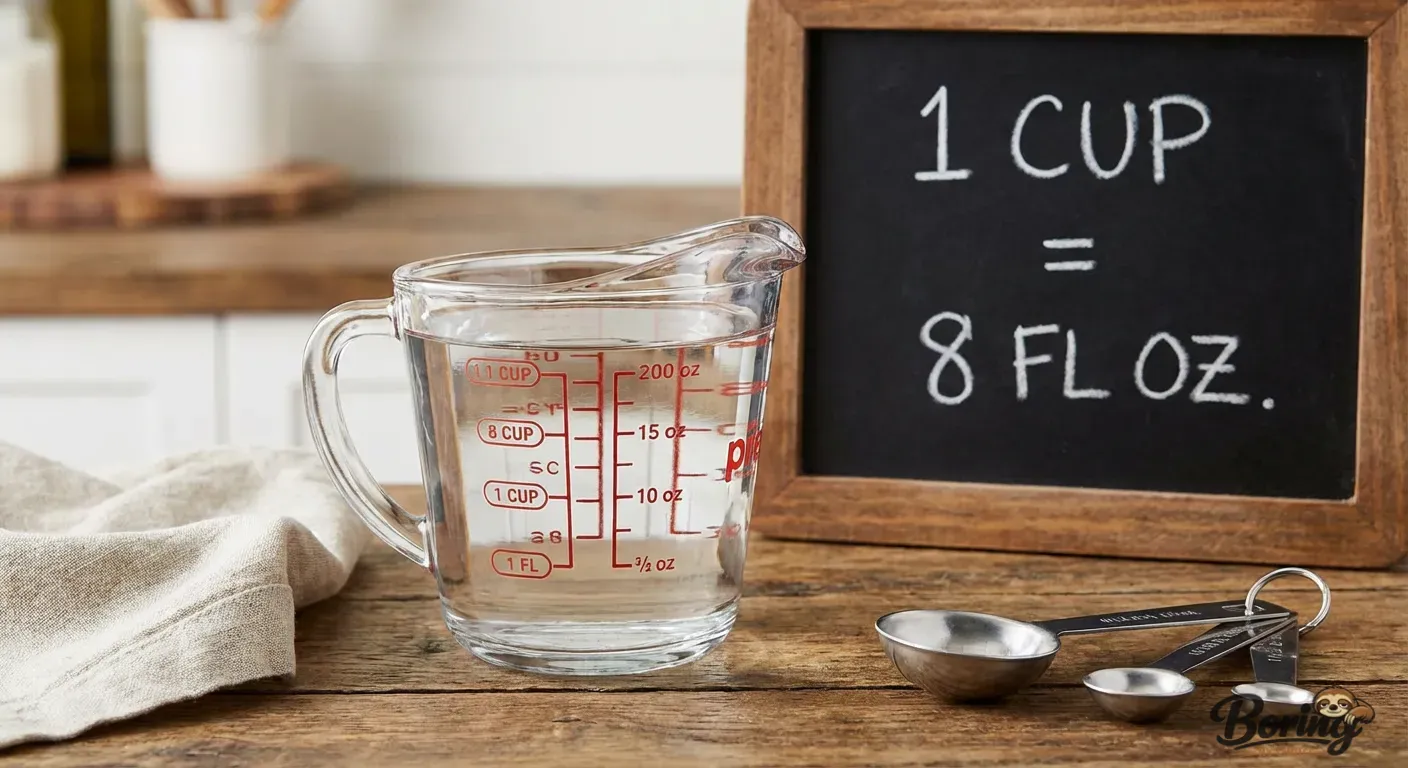
The short answer? 1 cup = 8 fluid ounces. But as with most things in cooking, the full story is a little more nuanced than that. Dry ounces, fluid ounces, metric cups, imperial cups — they all play by slightly different rules.
This guide breaks it all down clearly, so you never have to second-guess a measurement again.
The Basic Answer: How Many Ounces in a Cup?
Let’s start simple.
1 US cup = 8 US fluid ounces (fl oz)
That’s the standard conversion you’ll see in virtually every American recipe. Whether you’re measuring water, milk, broth, or juice, one cup holds exactly 8 fluid ounces.
Here’s where it gets tricky: the word “ounce” can refer to two completely different things — fluid ounces (a measure of volume) and dry ounces (a measure of weight). These are not interchangeable, and mixing them up is one of the most common kitchen mistakes people make.
Read: DopeBox: The Ultimate Guide to Free Ad-Free Movie Streaming Online
Fluid Ounces vs. Dry Ounces: What’s the Difference?
This is the distinction that causes the most confusion, so let’s clear it up once and for all.
Fluid Ounces (Volume)
A fluid ounce measures how much space a liquid takes up. When a recipe says “8 fl oz of milk,” it’s telling you to fill your measuring cup to the 1-cup line. Volume doesn’t care about the weight of what’s inside — it only cares about space.
Dry Ounces (Weight)
A dry ounce measures weight. When a recipe says “4 oz of shredded cheese,” you’d technically need a kitchen scale to be precise. However, many people — especially in American home cooking — use measuring cups for dry ingredients too, which is where approximations come in.
The key rule to remember:
- Measuring a liquid? Use fluid ounces and a liquid measuring cup.
- Measuring a dry ingredient? Use a kitchen scale for true accuracy, or a dry measuring cup for approximation.
Ounces in a Cup — Quick Reference Chart
Here’s a simple breakdown of common cup-to-ounce conversions you’ll use constantly in the kitchen:
| Cups | Fluid Ounces | Tablespoons | Milliliters |
|---|---|---|---|
| ⅛ cup | 1 fl oz | 2 tbsp | 30 ml |
| ¼ cup | 2 fl oz | 4 tbsp | 60 ml |
| ⅓ cup | 2.7 fl oz | 5⅓ tbsp | 80 ml |
| ½ cup | 4 fl oz | 8 tbsp | 120 ml |
| ⅔ cup | 5.3 fl oz | 10⅔ tbsp | 160 ml |
| ¾ cup | 6 fl oz | 12 tbsp | 180 ml |
| 1 cup | 8 fl oz | 16 tbsp | 240 ml |
| 2 cups | 16 fl oz | 32 tbsp | 480 ml |
| 4 cups | 32 fl oz | 64 tbsp | 960 ml |
Bookmark this table. You’ll come back to it more than you’d expect.
How Many Ounces in a Cup — US vs. UK vs. Metric
Here’s something a lot of people don’t realize: a “cup” isn’t the same size everywhere in the world. If you’re following a recipe from a different country, the cup measurement can vary enough to affect your results.
| System | 1 Cup = |
|---|---|
| US customary cup | 8 fl oz (236.6 ml) |
| US legal cup (nutrition labeling) | 8.11 fl oz (240 ml) |
| Imperial cup (old UK) | 10 fl oz (284 ml) |
| Metric cup (Australia, Canada, NZ) | 8.45 fl oz (250 ml) |
The difference between a US cup and a metric cup is small — about half a fluid ounce — but when you’re scaling a recipe up for a crowd, those small gaps add up fast.
Practical tip: If you’re cooking from an Australian or Canadian recipe, your US measuring cup will give you slightly less than intended. For casual cooking it won’t matter much, but for precise baking, it can affect your rise and texture.
How Many Ounces in a Cup for Common Ingredients?
This is where dry vs. liquid really comes into play. Even though 1 cup always equals 8 fluid ounces by volume, the weight in ounces of that same cup varies dramatically depending on what’s inside it.
| Ingredient | 1 Cup Volume | Weight (oz) |
|---|---|---|
| Water | 8 fl oz | 8.3 oz |
| Whole milk | 8 fl oz | 8.6 oz |
| All-purpose flour | 8 fl oz | 4.4 oz |
| Granulated sugar | 8 fl oz | 7.1 oz |
| Brown sugar (packed) | 8 fl oz | 7.7 oz |
| Butter | 8 fl oz | 8 oz |
| Honey | 8 fl oz | 12 oz |
| Rolled oats | 8 fl oz | 3.2 oz |
| Cocoa powder | 8 fl oz | 3.5 oz |
| Salt | 8 fl oz | 9.6 oz |
Notice how honey — a dense liquid — weighs 12 oz per cup, while rolled oats weigh barely 3 oz for the same volume? That’s why professional bakers always weigh ingredients rather than scooping them.
How Many Ounces in a Cup of Coffee?
Funny enough, coffee is one of the most common places where this question creates real confusion — because the “cup” on your coffee maker isn’t the same as a standard measuring cup.
- Standard US measuring cup: 8 fl oz
- “Cup” on most coffee makers: 5–6 fl oz
- A standard mug: 8–12 fl oz
- A grande at a coffee shop: 16 fl oz
So when your 12-cup coffee maker brews what it claims is a full pot, you’re actually getting closer to 60–72 fl oz (7.5–9 standard cups), not 96 fl oz. Keep this in mind when measuring water for your morning brew — always follow the coffee maker’s own markings rather than a kitchen measuring cup.
How Many Ounces in a Cup for Baking — Why Precision Matters
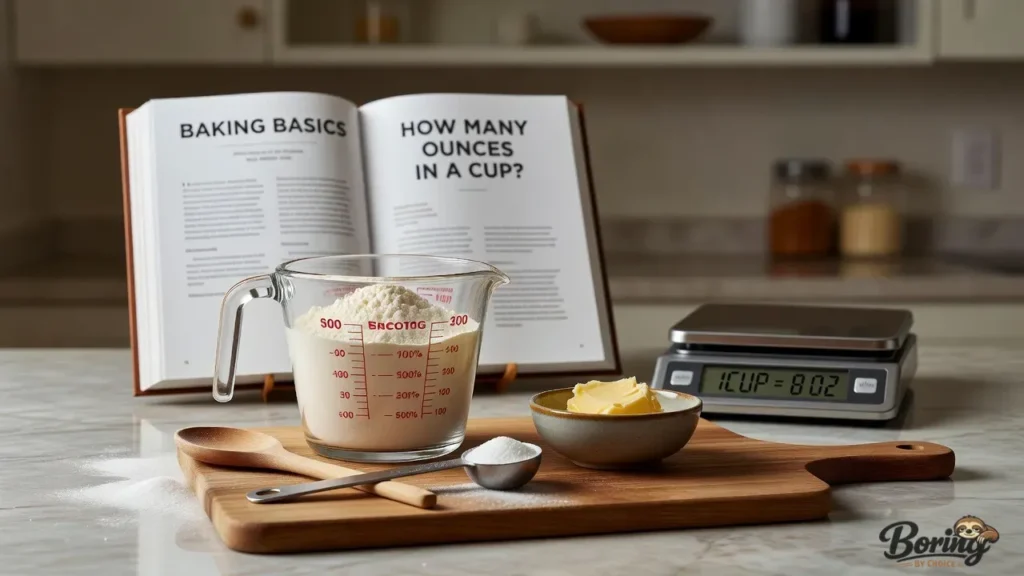
If there’s one place where understanding ounces vs. cups really counts, it’s baking. Unlike cooking, where you can improvise and adjust on the fly, baking is chemistry. Too much flour dries out your cake. Too little sugar affects browning and texture. A slight imbalance in wet-to-dry ratios can mean the difference between a fluffy muffin and a dense brick.
The Flour Problem
This is the classic culprit. When you scoop flour directly from the bag with your measuring cup, you’re compacting it. One scoop can hold anywhere from 4 to 6 ounces depending on how tightly packed it is — a variation of up to 50%.
The right way to measure flour:
- Spoon the flour loosely into your measuring cup.
- Level it off with a straight edge.
- Better yet, use a kitchen scale and weigh 4.4 oz (125g) per cup.
The Sugar Problem
Granulated sugar is more forgiving than flour, but brown sugar is a different story. Most recipes that call for brown sugar specify “packed” — meaning you press it firmly into the cup. That “packed” cup weighs noticeably more than a loosely filled one.
When in doubt, a kitchen scale eliminates all of this guesswork entirely.
Converting Ounces to Cups — Working Backwards
Sometimes you need to go the other direction — you have a certain number of ounces and need to know how many cups that equals. The formula is simple:
Cups = Fluid Ounces ÷ 8
Quick Examples:
| Fluid Ounces | Cups |
|---|---|
| 4 fl oz | ½ cup |
| 6 fl oz | ¾ cup |
| 8 fl oz | 1 cup |
| 12 fl oz | 1½ cups |
| 16 fl oz | 2 cups |
| 24 fl oz | 3 cups |
| 32 fl oz | 4 cups (1 quart) |
| 64 fl oz | 8 cups (½ gallon) |
| 128 fl oz | 16 cups (1 gallon) |
The Full US Liquid Measurement Hierarchy
It helps to understand where cups and ounces sit within the broader US measurement system:
1 gallon
  = 4 quarts
  = 8 pints
  = 16 cups
  = 128 fluid ounces

1 quart
  = 2 pints
  = 4 cups
  = 32 fluid ounces

1 pint
  = 2 cups
  = 16 fluid ounces

1 cup
  = 8 fluid ounces
  = 16 tablespoons
  = 48 teaspoons
Knowing this hierarchy makes it easy to scale recipes up or down without needing a calculator every step of the way.
Practical Tips for Measuring Accurately
Getting your measurements right doesn’t require fancy equipment. Here are a few habits that make a real difference:
1. Use the right type of measuring cup. Liquid measuring cups are transparent with a pour spout — read them at eye level. Dry measuring cups are meant to be filled to the brim and leveled off. Using the wrong one for the wrong ingredient introduces error before you even start.
2. Read liquid measurements at eye level. When measuring liquids, set the cup on a flat surface and crouch down so the measurement line is at your eye level. Reading from above causes a parallax error that can throw off your measurement by a tablespoon or two.
3. Invest in a kitchen scale. A basic digital kitchen scale costs less than $15 and eliminates nearly every measurement debate. Once you start baking by weight, you won’t go back.
4. Level off dry ingredients. After filling a dry measuring cup, use the back of a butter knife to sweep across the top. That small mound of extra flour or sugar you remove actually matters more than you think.
5. Don’t pack flour. Unless a recipe explicitly says “packed,” flour should always be spooned in loosely and leveled. Packed flour is one of the leading causes of dry, dense baked goods.
Frequently Asked Questions
Is 8 oz always equal to 1 cup?
For fluid ounces, yes — 8 fl oz equals exactly 1 US cup. For dry ounces (weight), the answer depends entirely on the ingredient, since different substances have different densities.
How many ounces in a half cup?
A half cup equals 4 fluid ounces.
How many ounces in a quarter cup?
A quarter cup equals 2 fluid ounces.
How many cups is 16 oz?
16 fluid ounces equals 2 cups.
How many cups is 32 oz?
32 fluid ounces equals 4 cups, which is also 1 quart.
Does the type of liquid affect how many ounces are in a cup?
By volume, no — 1 cup is always 8 fl oz regardless of what liquid it contains. By weight, yes — denser liquids like honey or syrup will weigh more per cup than water.
Why does my coffee maker say 12 cups but only fill my 8-cup pot?
Because most coffee makers define a “cup” as 5–6 oz, not 8 oz. It’s an industry quirk that has confused coffee drinkers for decades.
Summary
So, how many ounces in a cup? Here’s the quick-reference version:
- 1 US cup = 8 fluid ounces — the standard for American recipes.
- Fluid ounces measure volume; dry ounces measure weight — they’re not the same thing.
- Cup sizes vary internationally — US (236 ml), metric (250 ml), and old imperial UK (284 ml) cups are all different.
- For baking, use a kitchen scale — cup measurements for dry ingredients are approximations.
- Your coffee maker’s “cup” is not a real cup — it’s typically 5–6 oz.
Once you’ve got these fundamentals locked in, you’ll move through recipes with a lot more confidence — and a lot fewer Google searches mid-bake.